
12 Most Photogenic Slot Canyons in Utah That Are Almost Too Beautiful to Share


Antelope Canyon was one of the first things I ever added to my travel bucket list. Finally, during my van life stretch through the Southwest, I finally made it there, wedged between tour groups, million photos later, completely captivated by the fiery light slicing through the narrow sandstone walls.
That visit kicked off a chain reaction. One slot canyon turned into five, each one different in shape, color, and how the sun moved through it.
Utah has more of these formations than almost anywhere, and many remain off the radar besides the big-name ones. These 12 best slot canyons in Utah highlight the most photogenic ones in the state, from well-known stops to still quiet trails that require a hardcore 4×4.

1. Antelope Canyon, Arizona (near the Utah border)
You’ve seen it in a million photos, but, it’s something else entirely in person. This sandstone slot canyon is technically in Arizona, but if your road trip even grazes southern Utah, you can’t skip Antelope Canyon.
There are a few sections of Antelope Canyon, with Upper and Lower being the main ones. However, Canyon X, Antelope Canyon’s little sister, is an equally stunning alternative with fewer crowds and cheaper.
How to Experience: The canyon is on Navajo land and only accessible via guided tours. Tours to Upper Antelope is more popular (and flatter), while booking a tour for Lower Antelope involves ladders and tighter spaces. Both require advance booking, especially from March through October, when the light beams glow around midday.

2. The Narrows, Zion National Park
If your idea of hiking includes waist-deep river water and 1,000-foot canyon walls towering like natural skyscrapers, welcome to The Narrows. This is one of Zion’s signature experiences, wading through a slot canyon with towering sandstone cliffs and the Virgin River running right through it.
How to Experience: You can hike The Narrows two ways: bottom-up from the Temple of Sinawava (no permit needed) or top-down from Chamberlain’s Ranch (permit required, and difficult).
Most people go bottom-up after renting some gear in Springdale (yes, even in July) and start early. You’ll be in and out of the water all day. I went in January and even needed to get a dry suit.

3. Peek-a-Boo & Spooky Gulch, Grand Staircase–Escalante
Already not as well-known as the ones above, the twin canyons, Peek-a-Boo, has arches and tight curves, while Spooky Gulch gets so narrow you’ll need to ditch your backpack and shimmy sideways. After a difficult 4×4 route, people still have to crawl, duck, and scoot when the walls close in. It’s tight, wild, and easily one of the state’s weirdest and most fun routes.
How to Experience: To get there, you’ll need to drive down Hole-in-the-Rock Road, a bumpy, washboard route best tackled with high clearance and good tires. From the Dry Fork trailhead, it’s about a 3-mile loop to do both canyons.

4. Buckskin Gulch, Paria Canyon-Vermilion Cliffs Wilderness
If you couldn’t get the lottery permit for the Wave nearby, Buckskin Gulch is the next best thing. It stretches around 16 miles, making it the longest continuous slot canyon in the U.S. The walls here feel like they never end, with deep reds and tight corridors. Some sections are so narrow and tall that sunlight barely touches the floor.
How to Experience: The easiest access starts at the Wire Pass trailhead, which connects to Buckskin after about 1.5 miles. You can make it a short out-and-back or go all-in with a full-day (or multi-day) hike through to Lee’s Ferry, but permits are required if you go deep.

5. Zebra Slot Canyon, Grand Staircase–Escalante
This canyon got its name from its striped sandstone walls that resemble a zebra’s pattern. The colors here are bold red, white, and peach layers that twist through the walls smoothly over undulating wall textures.
It also has a bit of a reputation. Depending on recent rainfall, you may encounter standing water that smells not amazing. But if conditions are right, Zebra delivers one of the most unique slot experiences in the Southwest.
How to Experience: Start at the Harris Wash trailhead off Hole-in-the-Rock Road. It’s a 5.2-mile round trip that is mostly exposed but ends with a very tight slot. Be ready to get wet, and don’t bring a giant backpack or anything.
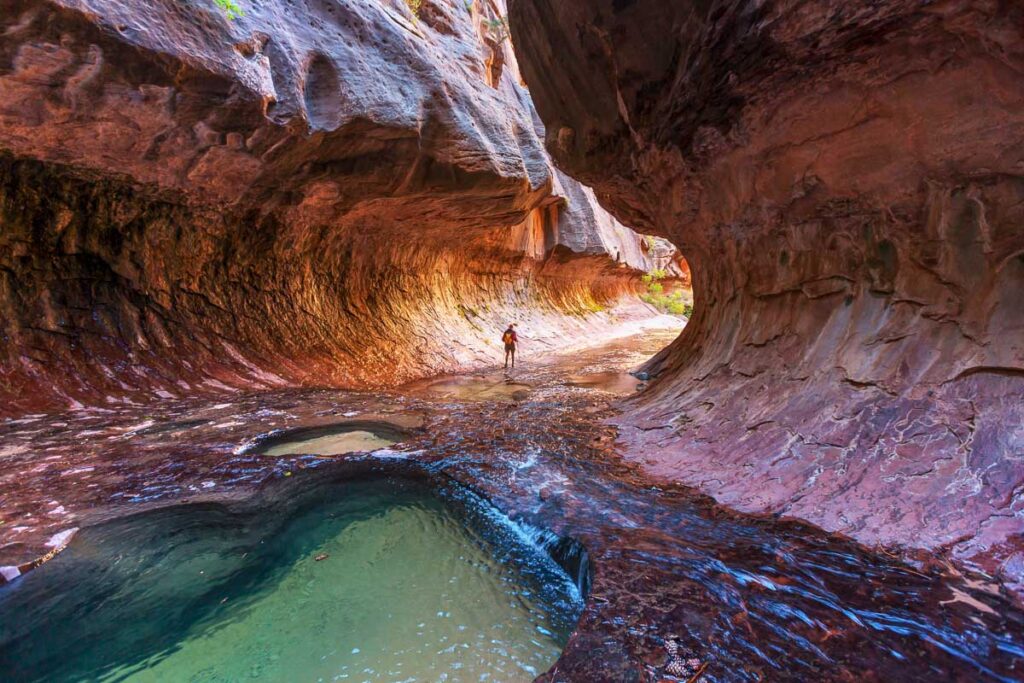
6. The Subway, Zion National Park
Far from the traditional list of things to do in Zion, the Subway is carved into a curved tube of rock and an extremely difficult and dangerous hike. There are waterfalls, deep green pools, and light bouncing around the walls in ways that make every photo look edited.
The nickname “Subway” comes from the tunnel-like shape that’s been the backdrop for many outdoor gear ads.
How to Experience: There are two ways in: the top-down route (which involves rappelling and requires a permit, skills, and gear) or the more approachable bottom-up hike, which still requires a permit but no ropes. The bottom-up trek is around 9 miles round trip and includes river crossings and boulder scrambling. The trail starts at Left Fork Trailhead and can be tricky to follow, so come prepared.
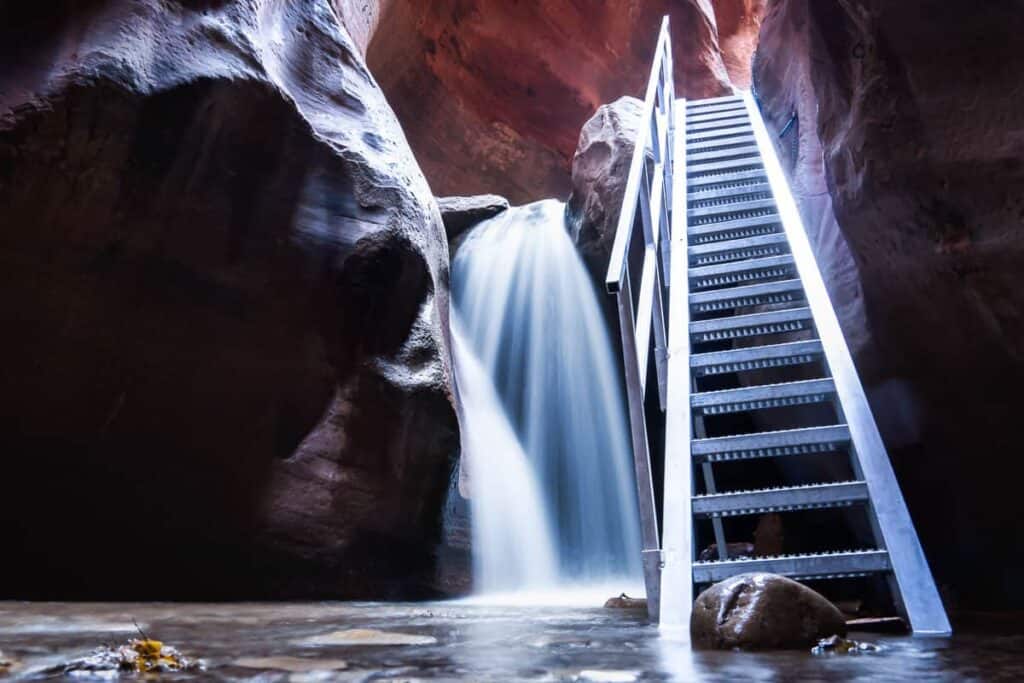
7. Kanarra Falls (Kanarra Creek Canyon), near Zion
Just outside Zion, Kanarra Falls is like a mini-Narrows with a waterfall tucked inside that looks like it was made for an REI commercial. The canyon has ladders bolted into slick walls, bright stripes of red rock, and a creek you’ll follow almost the entire way.
The water is cold, the walls are close, and the photo payoff is huge. Unfortunately, if you’ve seen that wooden ladder with the flowing water behind it on Instagram, it has been replaced by metal a few years back.
How to Experience: Permits are required, but you can just get a ticket at the entrance unless you are coming on a holiday or peak days. It’s about 4.5 miles round trip, and you are in or near water pretty much all the time. You’ll start at a dedicated trailhead in Kanarraville, and many turn back after the second waterfall.

8. Labyrinth Canyon, Lake Powell
Since my last kayaking trip on Lake Powell, I’ve been meaning to backpack overnight to Labyrinth Canyon. The only way in is by kayak or boat, which has an off-the-grid feel that will require a lot of paddling.
Once you hit the entrance, the sandstone walls rise and tighten like the canyon’s slowly pulling you in. Sunlight slices down in strips, turning the place gold and copper depending on the hour. It’s quiet, it’s wild, and you will probably be the only one in there.
How to Experience: Launch from Antelope Point Marina or Wahweap Marina on Lake Powell to get there. Kayak rentals are easy to find, and the paddle is around 32 miles round trip if you start at Antelope Point Marina.
There areIf those numbers seem impossible, there’s also two licensed water shuttles to Labyrinth Canyon.
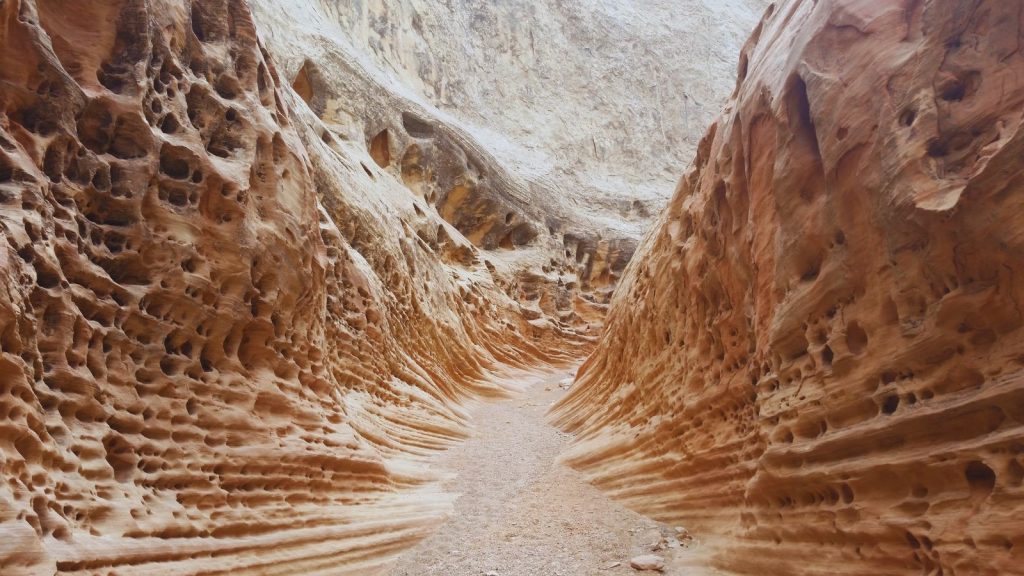
9. Little Wild Horse Canyon, San Rafael Swell
This is the gateway to Utah’s slot canyons, beginner-friendly but still dramatic enough to make you feel like a explorer. Little Wild Horse’s smooth, narrow walls twist in tight curves, and there’sa loop option pairs it with nearby Bell Canyon.
It’s often ranked as one of the best easy-to-access slots in the state, which means families, photographers, and solo hikers all tend to cross paths here.
How to Experience: The trailhead is right near Goblin Valley State Park, and the full loop is about 8 miles (though many people turn back halfway through). Depending on recent weather, expect a little scrambling and maybe some puddle-hopping, but overall, it’s low-stress and high-reward. No permit is needed, and the access road is usually doable for most vehicles.
10. Willis Creek Slot Canyon, Grand Staircase–Escalante
Willis Creek is another slot canyon that is flat, easy to follow and delivers beauty without demanding a massive effort. A shallow creek runs through much of the slot, adding a small splash factor that just barely wets your socks. The striped canyon walls tower overhead but feel more chill than claustrophobic.
How to Experience: From the town of Cannonville, there’s a dirt road drive to the trailhead that is usually fine for most cars unless things are really muddy. The walk is about 4.8 miles round trip, but you can go as far as you like and turn around whenever.
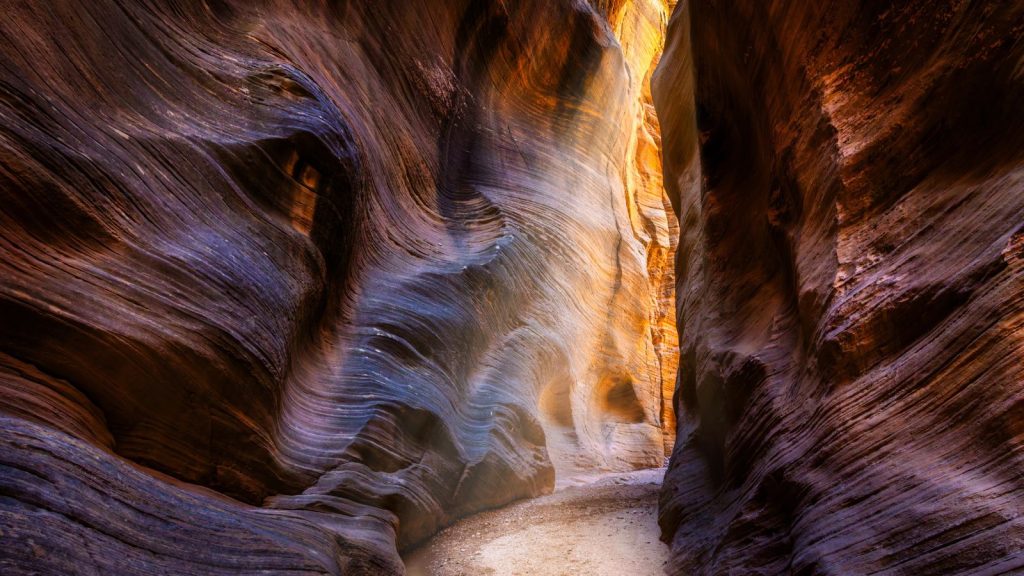
11. Burr Trail’s Singing Canyon, near Boulder UT
Singing Canyon is barely a quarter-mile long, but thanks to the narrow walls and smooth rock, it has insane natural acoustics. Sing, play an instrument, or clap, and you’ll hear the echo bounce back with eerie clarity. Musicians have been known to bring flutes or guitars in here just to hear what it sounds like.
How to Experience: The canyon is just off the Burr Trail Road near Boulder, Utah, about 11 miles from town, with a pull-off and sign marking the spot. No hiking required, no permit, and no real elevation gain. It’s an easy addition to a longer drive through Grand Staircase–Escalante.
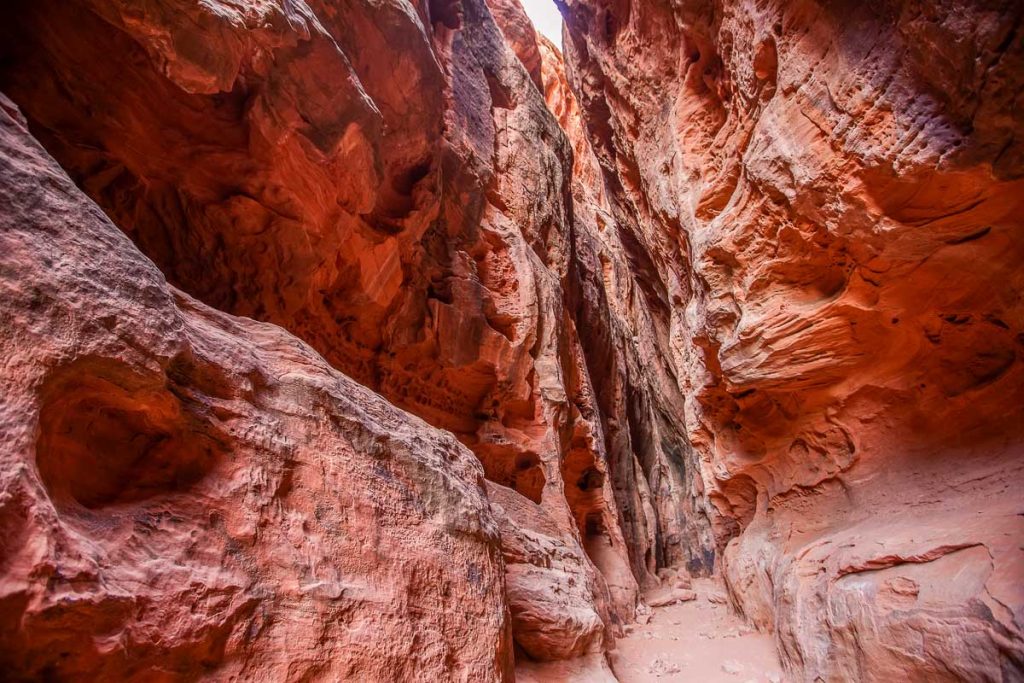
12. Jenny’s Canyon, Snow Canyon State Park
Jenny’s Canyon is short and sweet and located in one of my favorite state parks, Snow Canyon State Park. It’s just a five-minute walk from the parking lot, and the sandstone walls still feel dramatic enough to be impressive. The end of the canyon has a natural amphitheater feel, and the lighting is usually soft and diffused.
How to Experience: The trail is less than half a mile round trip, completely flat, and great for kids or first-timers. Snow Canyon charges a modest entry fee, but the park’s whole is relaxed and scenic, so it’s worth spending a few extra hours exploring once you’re in. Jenny’s closes seasonally for nesting birds (usually March through June), so check before you go if it’s spring.
Catherine, a seasoned travel writer, has lived in 4 different states and explored 36 states and 28 national parks. After spending two years embracing van life, she's now dedicated to sharing her vast knowledge of day trips across America. Catherine's other works has been referenced in major publications like MSN, Self, and TripSavvy.
| MY FAVORITE TRAVEL RESOURCES |
✈️ Find amazing guided tours and experiences with Viator to maximize your time! 🏘️ Plan ahead and secure your accommodation with Booking.com in advance. 🧾 Rent a car with Discovercars in advance and get the best prices for your day trip adventures. |