
How Many of These 23 Famous Monuments in the US Have You Seen in Person?


Some places in the US don’t need much introduction. You’ve seen them in textbooks, documentaries, and license plates. Some are every bit as massive and moving as you’d expect, others surprise you into quietness. You don’t need to be a history major to feel something when you’re standing at the base of the 911 Memorial or looking up at Mount Rushmore.
This list covers 20 of the most historically significant and famous monuments in the US. We take our kids to these places to help them understand the stories that shaped this nation.
1. Statue of Liberty – New York, NY
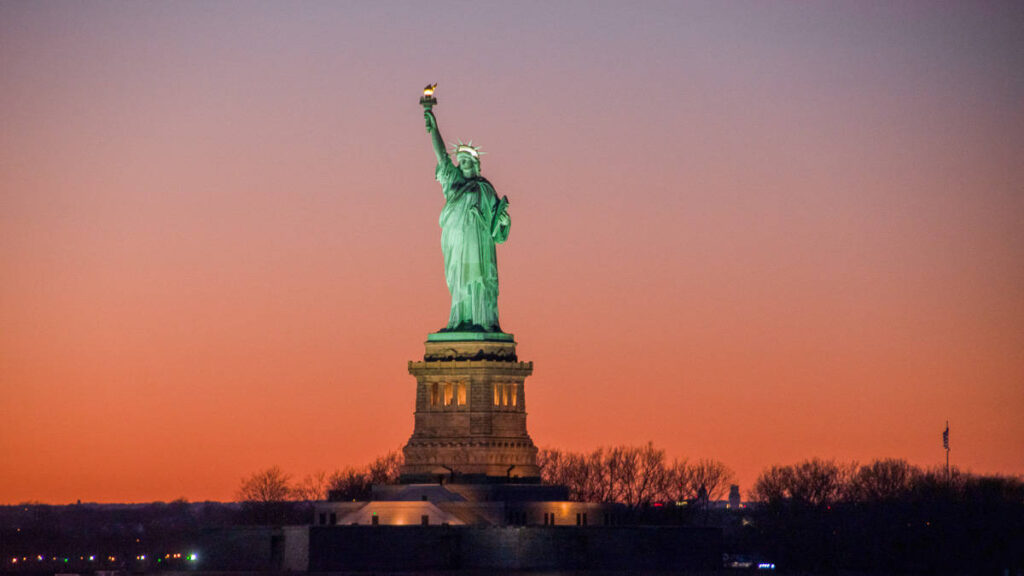
Gifted by France in 1886, the 305-foot statue on Liberty Island has become one of the most recognizable symbols of freedom in the world. Lady Liberty was one of the first sights seen by millions of immigrants arriving at Ellis Island, torch raised high above New York Harbor.
The design by Frédéric Auguste Bartholdi was ambitious for its time, and Gustave Eiffel helped engineer her internal frame.
Today, visitors can take a ferry from Battery Park, tour the base museum, and with a reservation, climb 162 narrow steps up to the crown. You can take the Staten Island Ferry for a free view.
2. Lincoln Memorial – Washington, D.C.
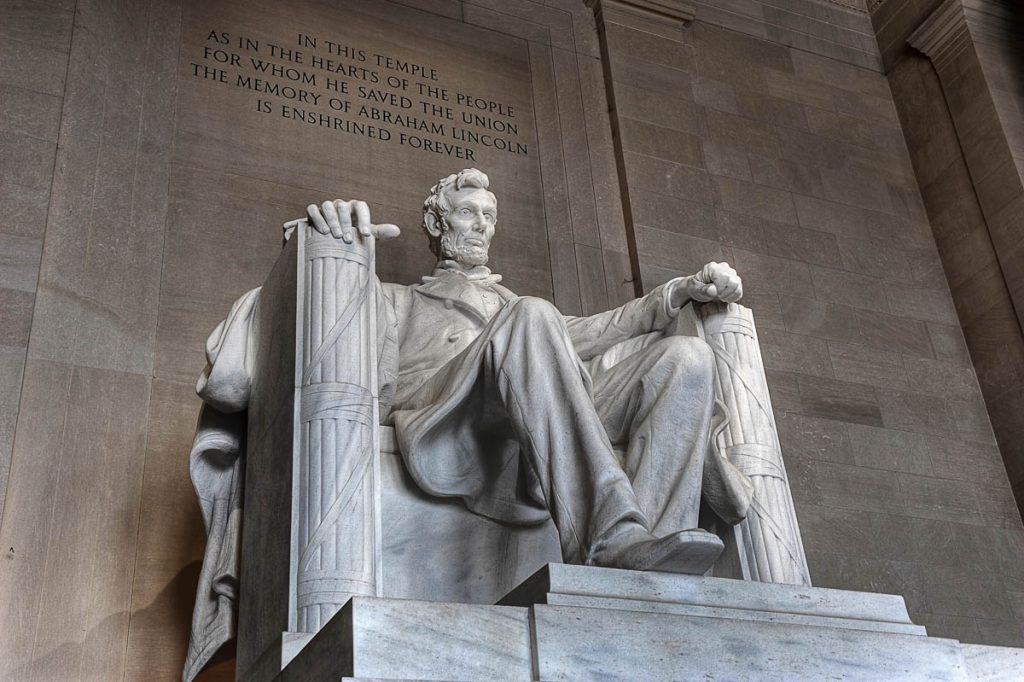
Lincoln is forever seated in silence, 19 feet tall, watching over the National Mall from across the reflecting pool. Completed in 1922, the memorial’s design was inspired by the Parthenon, with 36 columns representing the states in the Union when Lincoln died. The Gettysburg Address and his second inaugural speech are carved into the walls.
The steps have become a platform for protest, from Marian Anderson’s historic concert in 1939 to Martin Luther King Jr.’s “I Have a Dream” speech in 1963. It’s one of the most meaningful and most visited places in D.C. for a reason.
3. Mount Rushmore – Keystone, South Dakota

Mount Rushmore features 60-foot-tall granite portraits of Washington, Jefferson, Roosevelt, and Lincoln, picked to represent the birth, growth, development, and preservation of the US.
Sculptor Gutzon Borglum started the work in 1927, and it took 14 years (and over 400 workers) to complete it. The faces are massive, but the visitor experience also includes a museum, a short Presidential Trail, and a look into how this massive feat of engineering came together.
There’s controversy over the fact that the monument was carved into sacred Lakota land, and the nearby Crazy Horse Memorial tells a very different side of the story.
4. Washington Monument – Washington, D.C.

You can spot it from nearly everywhere in the capital. The Washington Monument, a 555-foot marble obelisk, honors George Washington, the only founding father unanimously elected as president.
Construction began in 1848 but stalled during the Civil War, which is why you can literally see the change in stone color halfway up the tower. Finished in 1884, it was the tallest building in the world until the Eiffel Tower came along. Today, you can ride an elevator to the top and look out over the entire National Mall.
5. The US Capitol – Washington, D.C.

The Capitol is where the laws of the land are written and argued over every day. Sitting atop Capitol Hill since 1800, this neoclassical building has seen wars, protests, presidential inaugurations, and plenty of power shifts.
The massive dome (added in the 1860s) is made of cast iron and topped by a bronze statue called Freedom. The Rotunda is filled with historical paintings and sculptures, and the National Statuary Hall features contributions from all 50 states.
Public tours are free but need to be booked ahead.
6. 9/11 Memorial & Museum – New York, NY

Built on the site of one of the most defining events in modern US history, the 9/11 Memorial and Museum honors the lives lost and the impact of the September 11 attacks. Growing up in New Jersey, everyone I knew was somehow affected by it.
The memorial features two giant square reflecting pools where the Twin Towers once stood, each nearly an acre wide, with the names of the victims engraved around the edges. The museum, located underground, tells the story through artifacts, recordings, and first-person accounts.
7. The Alamo – San Antonio, TX
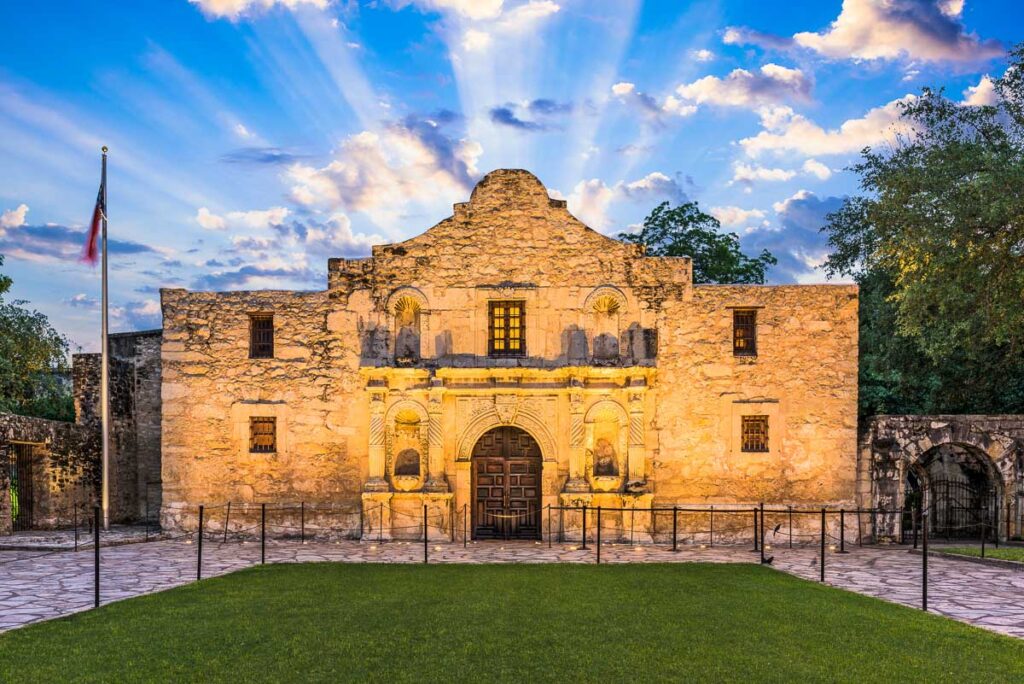
The Alamo has become a symbol of defiance, but its roots go back to the 1700s when it was built as a Spanish mission. What most people remember, though, is the 1836 battle during the Texas Revolution, when 200 defenders held out for 13 days against thousands of Mexican troops. They were ultimately overrun, but their resistance became legend. “Remember the Alamo” became a battle cry.
Today, the limestone mission stands right in downtown San Antonio. It’s smaller than you might expect, but inside the chapel and museum, a lot of story is packed into a tight space. It’s free to visit, but timed reservations are recommended.
8. Jefferson Memorial – Washington, D.C.
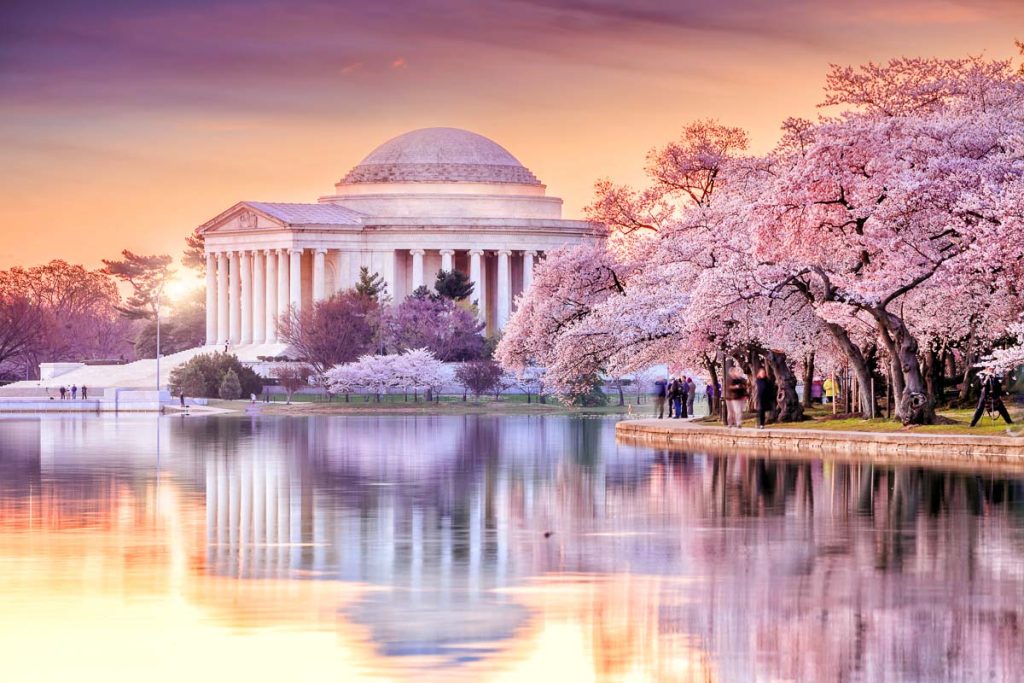
Set beside the Tidal Basin, the Jefferson Memorial was built to pay tribute to Thomas Jefferson, whose writings helped shape the nation’s foundation. Inside, a 19-foot statue of Jefferson stands beneath a domed ceiling, surrounded by passages from the Declaration of Independence and his personal letters.
It’s a quieter stop on the Mall. In spring, cherry blossoms wrap the monument in a pink halo.
9. Martin Luther King, Jr. Memorial – Washington, D.C.

One of the newest major monuments in the capital, the Martin Luther King, Jr. Memorial opened in 2011 and immediately became one of the most powerful places in the city. You walk through a massive split granite wall called the “Mountain of Despair” to reach a 30-foot carving of King, arms crossed, gaze fixed ahead.
Quotes from his speeches are etched into the surrounding stone, including one that inspired the monument’s design: “Out of the mountain of despair, a stone of hope.”
10. Liberty Bell – Philadelphia, PA
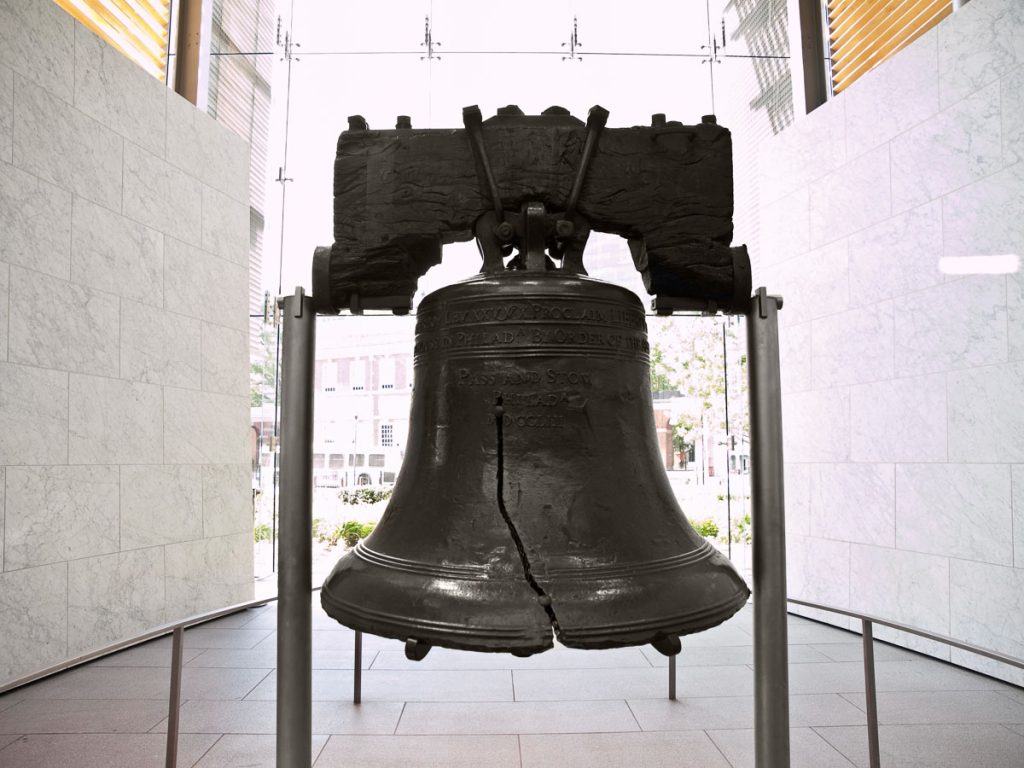
Everyone who was raised in the tri-state area has had a field trip to see it. Cast in 1752, the Liberty Bell rang out for the first public reading of the Declaration of Independence in 1776. The bell cracked early in its life, was repaired, cracked again, and hasn’t rung since.
It now sits in its own glass pavilion across from Independence Hall, and you can get close enough to see the crack for yourself.
11. Independence Hall – Philadelphia, PA

Inside Independence Hall, both the Declaration of Independence and the US Constitution were debated and adopted. The building itself is a Georgian-style red-brick hall dating back to 1753.
The original inkstand used to sign the Declaration is still there, and so is the Assembly Room, arranged almost exactly as it was during those heated 18th-century sessions.
Right across the way is the Liberty Bell, and the whole area is part of Independence National Historical Park, making it one of the densest pockets of American history you can walk through in a day.
12. Pearl Harbor National Memorial – Honolulu, HI
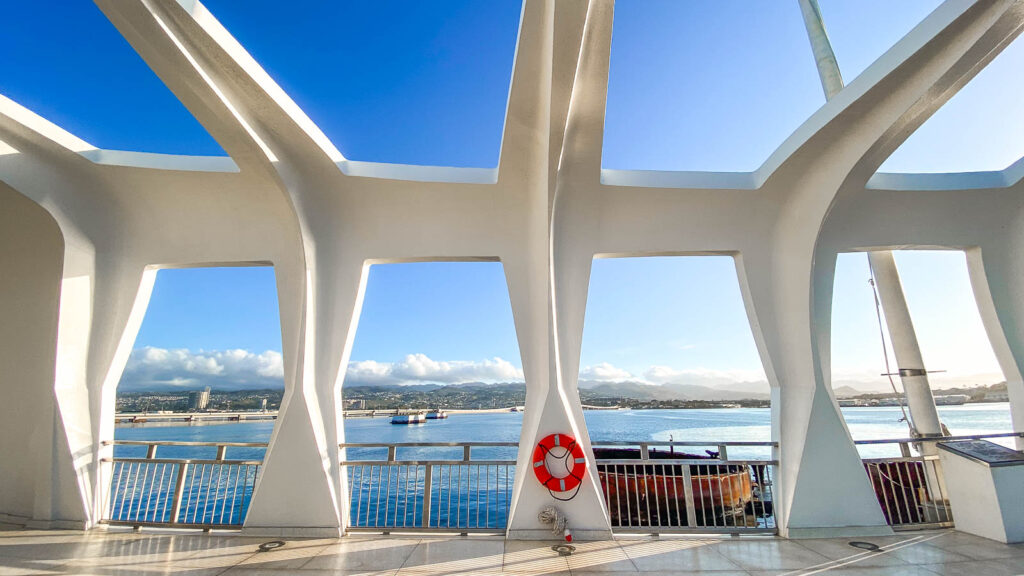
Even surrounded by the beauty of Oahu, Pearl Harbor stops you cold. The memorial sits above the sunken USS Arizona, where more than 1,100 sailors and Marines lost their lives during the attack on December 7, 1941. Oil still slowly seeps from the ship, known as “black tears,” nearly 80 years later.
The museum and visitor center provide a detailed, emotional timeline of events, but the boat ride to the floating memorial really sticks. Entry is free.
13. World War II Memorial – Washington, D.C.

Framed between the Washington Monument and the Lincoln Memorial, the World War II Memorial honors the 16 million Americans who served in the war, along with the more than 400,000 who died.
It opened in 2004 and includes 56 granite pillars representing US states and territories, surrounding a central fountain and two towering arches labeled Atlantic and Pacific. It’s designed to feel like a space for both remembrance and gathering. The bronze bas-reliefs on the walkway quietly tell the human side of the war.
Visit at night when everything is lit, and the fountains give it a reflective feel.
14. Arlington National Cemetery – Arlington, VA

Just across the Potomac from Washington, Arlington National Cemetery holds more than 400,000 graves of military service members, veterans, and families. The sheer scale is overwhelming, and the white headstones stretch on in every direction.
Key landmarks include the Tomb of the Unknown Soldier, where an honor guard stands watch 24/7, and the eternal flame at President John F. Kennedy’s grave. The cemetery is also the final resting place of civil rights giants like Medgar Evers and Supreme Court Justice Thurgood Marshall.
15. Gateway Arch – St. Louis, MO

Rising 630 feet above the Mississippi River, the Gateway Arch is the tallest monument in the US and a sleek symbol of westward expansion. Designed by architect Eero Saarinen and completed in 1965, its stainless steel curve reflects the sky.
What a lot of people don’t realize is that you can actually ride a tram to the top to a tiny space with big views over the river and the city. Below the Arch is a newly renovated museum that unpacks the complicated history in what is now one of the newest and the smallest national park in the country.
16. Ellis Island Immigration Station – New York, NY

For more than 12 million immigrants, Ellis Island was the first stop on their journey to becoming Americans. From 1892 to 1954, this was the busiest immigration inspection station in the country.
The restored main building now houses the Ellis Island National Museum of Immigration, where you can walk through dormitory-style rooms, view old medical screening stations, and even search for family names in the passenger database.
17. Mount Vernon – Mount Vernon, VA

George Washington’s home might be more modest than you’d expect. Mount Vernon sits on a bluff overlooking the Potomac River, and the estate has been preserved to look much like it did when Washington lived there.
You can tour the mansion, walk through the gardens, see the working farm and distillery, and visit Washington’s and Martha’s tombs. There’s also a powerful exhibit on the lives of the enslaved people who lived and worked here.
18. Monticello – Charlottesville, VA

Thomas Jefferson’s mountaintop home is beautiful yet deeply entangled with the reality of slavery. Monticello was Jefferson’s architectural experiment, blending classical design with Enlightenment-era ideas. He filled it with gadgets, skylights, and rotating bookstands.
The tour walks through not only Jefferson’s personal life and politics but also the lives of the more than 600 enslaved people who lived here, including Sally Hemings and her children. Don’t miss the Mulberry Row exhibit outside the house, which offers a clearer view of the labor that kept Monticello running.
19. Plymouth Rock – Plymouth, MA

According to tradition, Plymouth Rock marks the site where the Mayflower Pilgrims first landed in 1620. The truth is, there’s no actual proof they stepped onto this specific rock, but it became a symbol of early colonization and American origins anyway.
It now sits under a granite portico near the water’s edge in Pilgrim Memorial State Park. There’s not a ton to do here, but the nearby Plimoth Patuxet Museums give a much fuller picture of what life was like for both the Pilgrims and the Wampanoag people already living in the region.
20. Stonewall National Monument – New York, NY

In 1969, a small bar in New York’s Greenwich Village became the unlikely site of a movement that would change history. After years of police raids and discrimination, LGBTQ patrons at the Stonewall Inn fought back, sparking days of protests now known as the Stonewall Uprising.
Today, the site is recognized as the first US national monument dedicated to LGBTQ+ rights. The bar still operates, and the surrounding Christopher Park includes a series of statues and informative plaques. Pride parades, legal protections, and decades of activism trace back to this exact corner.
21. Gettysburg National Military Park – Gettysburg, Pennsylvania

Gettysburg is the battlefield where the tide of the Civil War turned. For three days in July 1863, Union and Confederate forces clashed in what would become the bloodiest battle fought on American soil, with over 50,000 casualties.
The park preserves the exact ground where it all happened, including Little Round Top, Devil’s Den, and Pickett’s Charge. The scale of it hits you immediately. Miles of open fields dotted with monuments, memorials, and cannons. The Gettysburg National Cemetery is where Lincoln gave his famous address just a few months later.
The visitor center is one of the best in the National Park System, with a massive cyclorama, museum, and daily ranger talks that bring the battle to life without glorifying it.
22. Crazy Horse Memorial – Black Hills, South Dakota
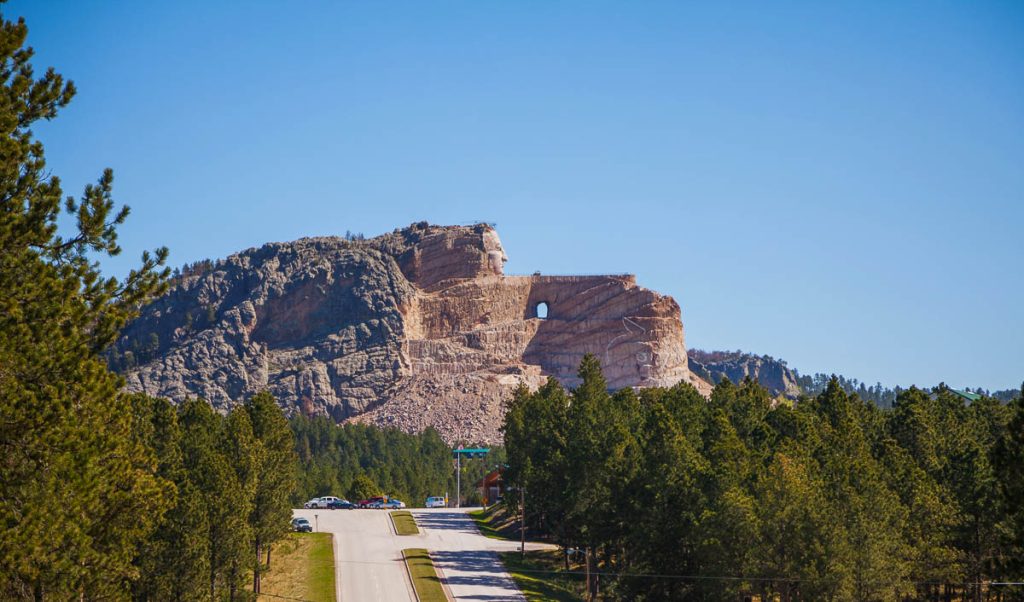
Started in 1948 and still under construction, the Crazy Horse Memorial is the largest mountain carving in progress anywhere in the world, bigger than Mount Rushmore by a lot. It honors the legendary Lakota leader who fought to protect his people and their land.
Sculptor Korczak Ziolkowski began the project after being invited by Lakota elders, and his family continues the work today. The face alone is 87 feet tall, and one day, the final sculpture will show Crazy Horse riding a horse and pointing to the horizon.
23. Manzanar National Historic Site – Owens Valley, California

Set in the high desert between the Sierra Nevada and Death Valley, Manzanar tells one of the most sobering stories in US history. This was one of ten internment camps where over 110,000 Japanese Americans were forcibly relocated during World War II, two-thirds of them US citizens. The camp operated from 1942 to 1945, surrounded by barbed wire and guard towers.
Recently, I walked through the reconstructed barracks, learned about their lives, and saw the absolutely beautiful memorial in front of the Sierra Nevadas.

Catherine, a seasoned travel writer, has lived in 4 different states and explored 36 states and 28 national parks. After spending two years embracing van life, she's now dedicated to sharing her vast knowledge of day trips across America. Catherine's other works has been referenced in major publications like MSN, Self, and TripSavvy.
| MY FAVORITE TRAVEL RESOURCES |
✈️ Find amazing guided tours and experiences with Viator to maximize your time! 🏘️ Plan ahead and secure your accommodation with Booking.com in advance. 🧾 Rent a car with Discovercars in advance and get the best prices for your day trip adventures. |