
16 Most Historic US Cities—And the Wild Stories You Probably Didn’t Learn in School


History in the US is often boiled down to the textbook basics of pilgrims, founding fathers, and the famous wars in a neatly packaged timeline learned in the 7th grade. Often, it just involves memorizing dates and names, but rarely does it bring the places behind those events to life. For travelers who want to connect the dots between what they learned and what actually happened, visiting the cities where history unfolded can completely change the narrative.
The US is full of destinations where the past is still visible in the streets and buildings shaped by it. These 15 most historic cities in the US are the best to travel to if you’re drawn to early colonial roots, civil rights landmarks, or unexpected chapters of American history.
1. Philadelphia, Pennsylvania

- Birthplace of American independence and constitutional law
Philadelphia is the launchpad of American democracy. This city saw the signing of both the Declaration of Independence and the US Constitution inside Independence Hall, a UNESCO World Heritage Site. Many know Pennsylvania for the cracked Liberty Bell, which draws over a million visitors a year.
Walk through Old City, where Betsy Ross allegedly stitched the first American flag, just a few blocks from where Ben Franklin is buried. Carpenters’ Hall hosted the First Continental Congress in 1774. Elfreth’s Alley, the oldest continuously inhabited street in the country, is still lined with homes from the 1700s. Check out the President’s House Site and see the foundations of George Washington’s residence. Round it out with the Museum of the American Revolution and the National Constitution Center.
2. Boston, Massachusetts

- Cradle of the American Revolution and colonial history
The most famous historical Boston event can be summarized as follows: In 1773, a group of angry colonists dressed as Mohawk Indians threw 342 chests of British tea into the harbor, causing an international scandal. That stunt kicked off a series of events that would end in a full-blown war for independence.
Boston may have the most historical landmarks packed into a single city. The Boston Massacre, Paul Revere’s midnight ride, and the Battle of Bunker Hill all unfolded here.
You can walk the Freedom Trail to 16 official sites, including the Old North Church and Faneuil Hall. The Paul Revere House still stands in the North End. The USS Constitution, the oldest commissioned warship afloat in the world, is still docked in the harbor. The Boston Tea Party Ships and Museum gives you a chance to toss tea overboard.
3. New York City, New York

- Founding port, immigration hub, and financial capital with deep roots
George Washington took the first presidential oath on the balcony of Federal Hall right on Wall Street. That same city would later become the first stop for over 12 million immigrants at Ellis Island. NYC has lived through every era, from Dutch colonization to Prohibition speakeasies and 9/11.
The Statue of Liberty is one of the nation’s most famous monuments. The Tenement Museum tells stories of real families who lived crammed into tiny apartments on the Lower East Side. Alexander Hamilton is buried at Trinity Church downtown, and walking across the Brooklyn Bridge is a USA bucket list item. Explore the Merchant’s House Museum and the Morris-Jumel Mansion in Harlem for glimpses of life in the 1700s.
4. Washington, District of Columbia
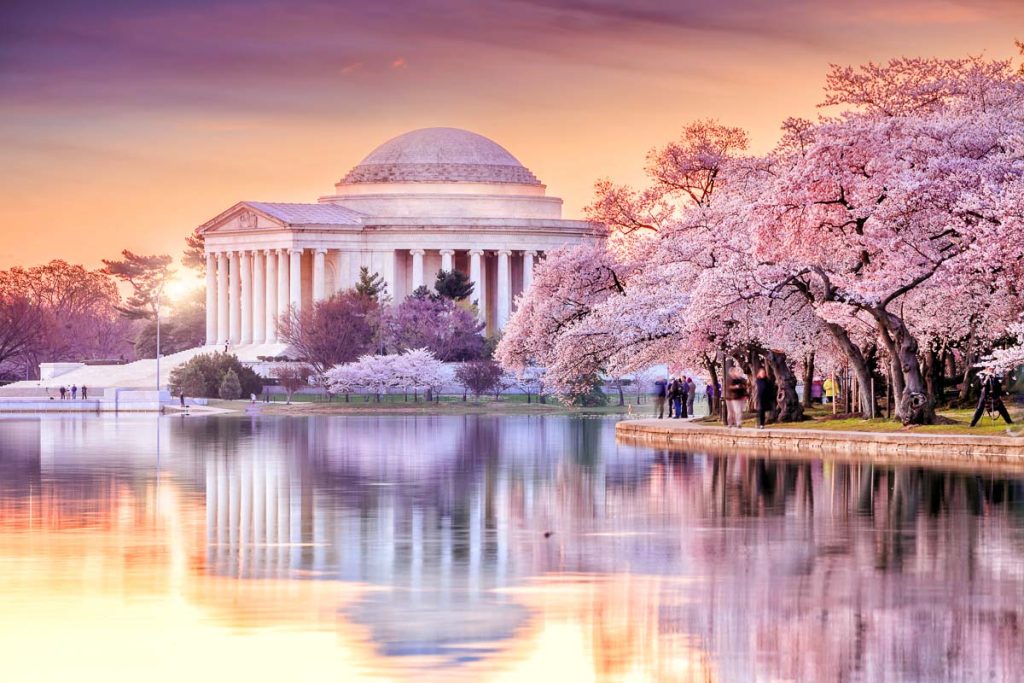
- Federal capital built for politics, protest, and symbolism
In 1814, the British stormed in and burned down the White House and Capitol during the War of 1812 while President Madison fled on horseback. Since then, Washington, D.C., has served as the backdrop for every major legislative decision, scandal, and million-person march in modern US history.
The National Mall is America’s front lawn and doubles as a timeline of civil rights and presidential legacies. The Lincoln Memorial alone has hosted everything from Martin Luther King Jr.’s “I Have a Dream” speech to Black Lives Matter protests. The Library of Congress holds over 170 million items. Visit the Capitol Building, the Supreme Court, and the National Archives to see the Constitution and Declaration of Independence up close. The best part? The Smithsonian museums are all free, making it a nice affordable getaway.
5. Charleston, South Carolina
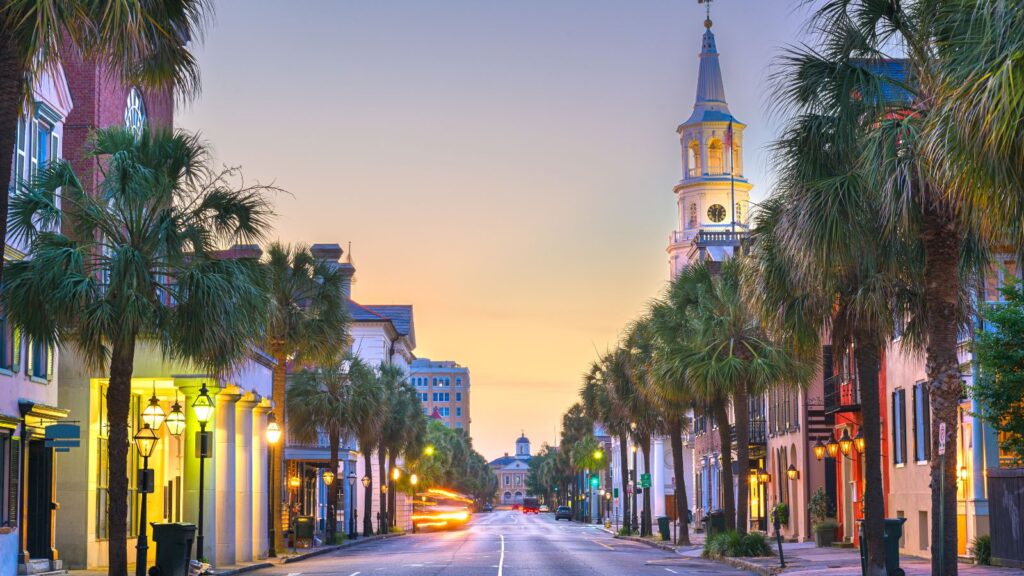
- Major player in colonial trade, Civil War, and antebellum history
In 1861, Confederate forces fired on Fort Sumter in Charleston Harbor, launching the Civil War. But this city’s tangled past goes back much further, with wealthy plantations and a massive port that made it the fourth largest city in America by 1790. It also became a central hub in the transatlantic slave trade.
You can visit Fort Sumter by boat, and the Old Slave Mart Museum is housed in a building where enslaved people were once sold. The Historic Charleston City Market has been around since the 1800s. Rainbow Row’s brightly colored homes have become one of the city’s most photographed blocks. Drayton Hall and Middleton Place are former plantations open to the public.
6. St. Augustine, Florida

- Oldest continuously occupied European-established city in the continental US.
Founded in 1565 by the Spanish, St. Augustine predates Jamestown and Plymouth by decades. Pirates once attacked it, British troops tried to burn it down, and somehow, buildings from the 1600s still stand. Castillo de San Marcos, the massive stone fortress by the bay, was built in the late 1600s and never fell in battle.
A visit here centers around the historic district. Flagler College sits in what used to be one of Henry Flagler’s grand hotels. There’s the oldest wooden schoolhouse in the country and a supposedly haunted lighthouse. The Lightner Museum houses 19th-century oddities. Visit the Colonial Quarter, the Old Jail, and Mission Nombre de Dios, which marks the site of the first Catholic mass in what is now the US.
7. Savannah, Georgia
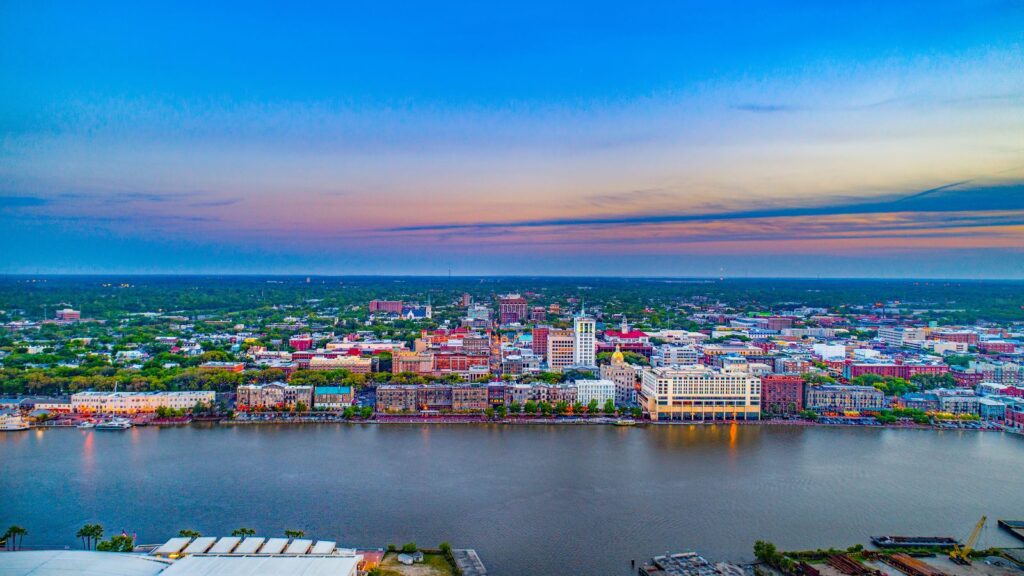
- Port city shaped by Revolutionary battles and antebellum wealth
General Sherman didn’t burn Savannah during his infamous March to the Sea. Instead, he gifted it to President Lincoln as a Christmas present in 1864. That’s just one odd chapter in this city’s timeline of duels and yellow fever outbreaks. Founded in 1733, Savannah was the first city in Georgia and one of the earliest planned cities in America.
Start with the historic district’s 22 public squares, which are part of the original 18th-century layout. The Owens-Thomas House & Slave Quarters digs deep into elite and enslaved life. You’ll also want to walk through Bonaventure Cemetery, a Gothic maze of Spanish moss and headstones dating back centuries. The First African Baptist Church, built by enslaved people in the 1850s, is still active today.
8. New Orleans, Louisiana
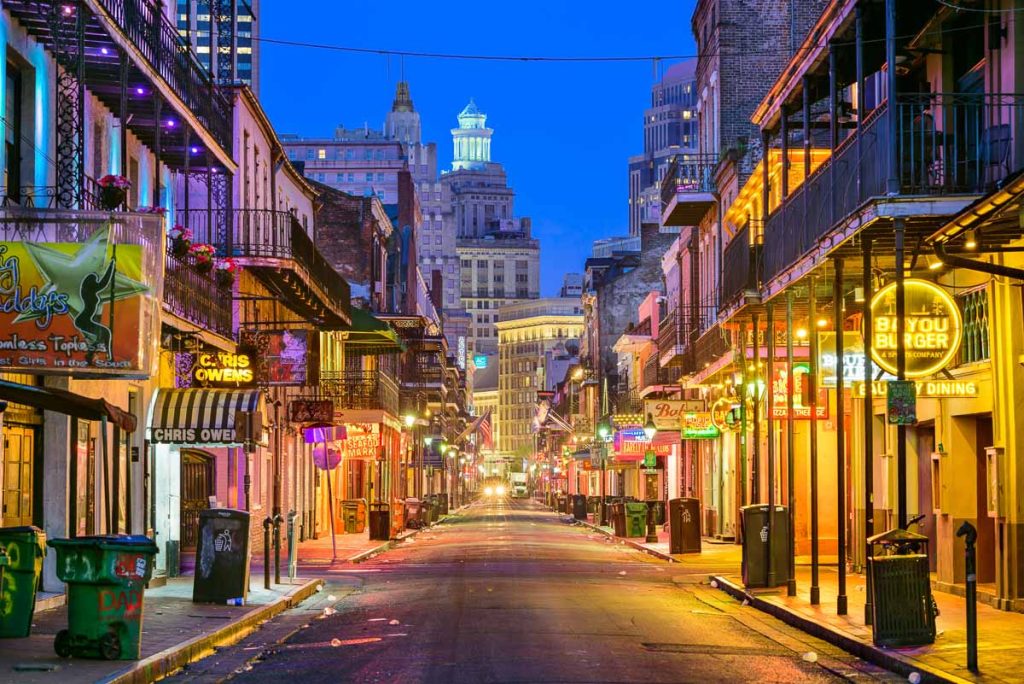
- French colony turned American must-visit US city with layers of rebellion and chaos.
This city’s French, Spanish, and African roots collide in a way no other US city can claim. New Orleans has survived hurricanes, fires, and total mismanagement, yet somehow still throws one of the best parties in the United States.
You can tour the Cabildo, where the Louisiana Purchase was finalized. Walk around the French Quarter buildings that date back to the 1700s and where one can now throw colorful beads off balconies. Visit Congo Square in Louis Armstrong Park, a site of public gatherings during slavery that helped shape American music. St. Louis Cathedral is the oldest in continuous use in the US. Then get outside to greater Louisiana, to ride around ancient swamplands on airboats.
9. San Antonio, Texas
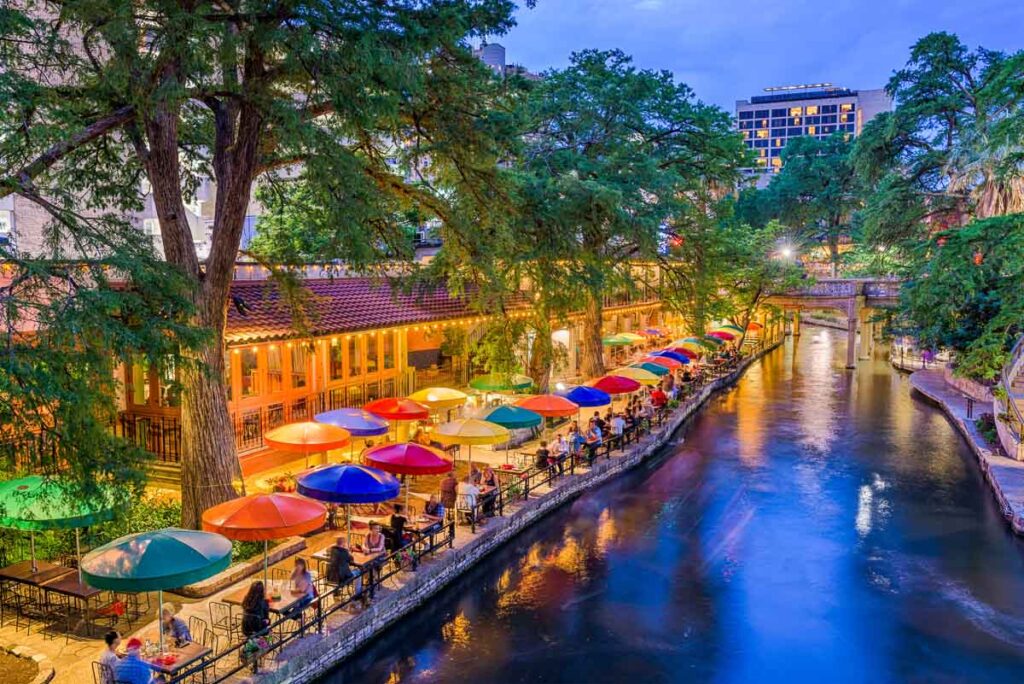
- Military flashpoint and mission town turned Texan icon.
Before it became a rallying cry, the Alamo was a Spanish mission. In 1836, a group of Texans defended it against the Mexican army for 13 days, ultimately losing the battle but fueling a revolution. San Antonio’s history runs deep in Native, Spanish, Mexican, and Texan identities.
Start with the Alamo, just one of the four missions in the San Antonio Missions National Historical Park. The Spanish Governor’s Palace is a preserved colonial home from the early 1700s. Walk the King William Historic District for a look at grand 19th-century mansions.
10. Santa Fe, New Mexico
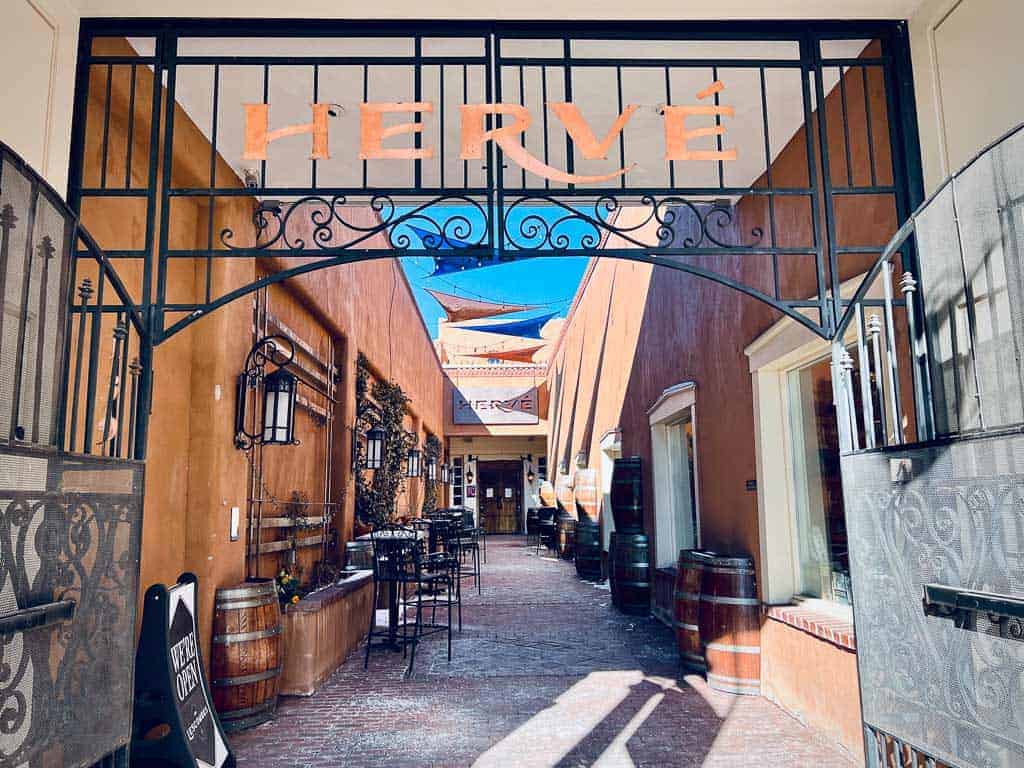
- Oldest capital city in the US with Indigenous, Spanish, and counterculture roots
In 1680, Pueblo Indians launched a successful revolt against Spanish colonists and drove them out of Santa Fe for over a decade. This city, founded in 1610, has been a power center through colonial rule, frontier expansion, and even the atomic age, thanks to nearby Los Alamos. Today, its adobe architecture hides centuries of clashes and reinvention.
The Palace of the Governors is the oldest public building in the US and anchors the historic plaza. The Loretto Chapel has a spiral staircase with no nails or support beams. San Miguel Chapel claims to be the oldest church structure in the country. Visit the New Mexico History Museum and El Rancho de las Golondrinas to immerse yourself in colonial life. Even Canyon Road, now filled with galleries, has structures dating back hundreds of years.
11. Richmond, Virginia

- Former Confederate capital with roots in rebellion and revolution
Patrick Henry dropped his “Give me liberty or give me death!” bombshell in a church in Richmond. The city later became the capital of the Confederacy during the Civil War. In recent years, its streets have seen everything from revolution to reconstruction to monument removals.
Start at St. John’s Church, where Henry made his legendary speech. The American Civil War Museum is housed partly in the old Tredegar Iron Works. Walk the historic Church Hill neighborhood and visit the Edgar Allan Poe Museum, one of my favorite authors. The Virginia State Capitol, designed by Thomas Jefferson, still houses the General Assembly. Hollywood Cemetery holds the graves of two US presidents and countless Confederate leaders.
12. Baltimore, Maryland

- Port town built on shipping, star-spangled defenses, and blue-collar grit
Francis Scott Key wrote “The Star-Spangled Banner” while watching British warships attack Fort McHenry in 1814. That anthem and that battle shot Baltimore into the national consciousness.
Fort McHenry is where you can see the actual flag that flew during the attack. The B&O Railroad Museum marks the start of America’s first commercial railroad. Visit the Edgar Allan Poe House and Museum, where the writer lived, and take a drink at the last place he was seen alive.
Fell’s Point is now the hip social place to go on the weekends to see the preserved maritime district, but also have great ice-cream from Pitango.
13. St. Louis, Missouri

- Gateway to westward expansion and birthplace of big American swings
St. Louis once hosted both the World’s Fair and the Summer Olympics in the same year. This city was also the launch point for Lewis and Clark back in 1804 as they headed west to map the unknown.
You can start at the Gateway Arch, which symbolizes westward expansion on what is now the smallest national park in the US. The Old Courthouse is where the Dred Scott case was first argued. Walk through the Soulard neighborhood to see French-style row houses and one of the oldest farmers’ markets in the country.
14. Mobile, Alabama

- Old colonial capital turned Mardi Gras pioneer with layers of Southern history.
Mobile, Alabama, throws the oldest Mardi Gras in the US, even before New Orleans. It was the capital of French Louisiana in 1702, later passed to the British, then the Spanish, and finally became American.
Check out Fort Conde, a partial reconstruction of the original 1700s French fort. Visit the Church Street Graveyard, where early settlers and some Confederate generals are buried. Oakleigh Historic Complex looks at antebellum life, while the Africatown Heritage House honors the last known slave ship to reach the US, the Clotilda.
15. Plymouth, Massachusetts

- The landing site of the Pilgrims and birthplace of Thanksgiving mythology
In 1620, the Mayflower landed here, and a group of English settlers started one of the most mythologized colonies in American lore. The story is told a million ways, but the real Plymouth was much grittier, with disease, starvation, and conflict plaguing the earliest settlers.
Plymouth Rock is underwhelming in size and low-key a tourist trap. The Plimoth Patuxet Museums do a solid job of showing what daily life looked like for both the Pilgrims and the Wampanoag people. Burial Hill is one of the oldest graveyards in New England. The Mayflower II, a full-scale replica of the original ship, sits in the harbor. Pilgrim Hall Museum is the oldest public museum in continuous operation in the US.
16. Salem, Massachusetts

- Witch trial capital that turned scandal into tourism
In 1692, more than 200 people were accused of witchcraft in Salem. Nineteen were executed. It’s one of the darkest chapters in colonial America, driven by mass hysteria and bad court decisions. Today, Salem fully owns its strange past and keeps that weird history alive all year.
You can tour the Salem Witch Museum, Witch House (home of Judge Jonathan Corwin), and the Old Burying Point Cemetery. The Salem Maritime National Historic Site includes historic buildings and wharves from the 1700s. The House of the Seven Gables, made famous by Nathaniel Hawthorne, still stands.
In October, the town becomes one big costumed street fair, making it one of the best towns to visit for Halloween.
Catherine, a seasoned travel writer, has lived in 4 different states and explored 36 states and 28 national parks. After spending two years embracing van life, she's now dedicated to sharing her vast knowledge of day trips across America. Catherine's other works has been referenced in major publications like MSN, Self, and TripSavvy.
| MY FAVORITE TRAVEL RESOURCES |
✈️ Find amazing guided tours and experiences with Viator to maximize your time! 🏘️ Plan ahead and secure your accommodation with Booking.com in advance. 🧾 Rent a car with Discovercars in advance and get the best prices for your day trip adventures. |