
These Gorgeous Lakes in the US Will Steal Your Heart Before You Even Step on the Shore


A blue lake surrounded by trees is nice. For this list, nice is not enough. If you’re looking for the most unique and beautiful lakes in the US with something visually strange or instantly recognizable, these are the best ones around the country.
I spent two years roaming around the US van-living and camping next to red rock canyons disappearing into the water, limestone towers rising from an ancient lakebed, milky turquoise water caused by a rockslide, or a lake sitting inside the collapsed remains of a volcano.
Personally, I’ve always been drawn to the blue of aquatic gems, so I’m excited to share with you some of my favorite lakes across the United States that completely took my breath away.
1. Lake Powell, Arizona and Utah
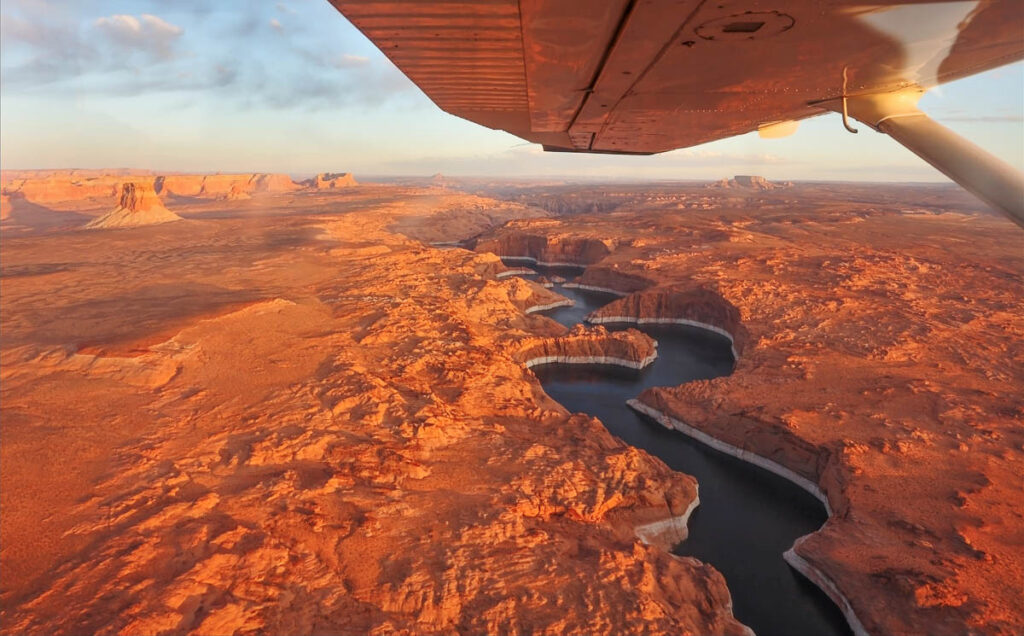
- Desert canyon reservoir
Lake Powell looks less like one lake and more like hundreds of blue fingers winding through red sandstone. Glen Canyon flooded after the construction of Glen Canyon Dam, leaving cliffs, arches, side canyons, and rock walls rising directly from the water.
Some sections are so narrow that boating through them feels completely removed from the wide open reservoir near Page. Rainbow Bridge sits farther up the lake, while places such as Reflection Canyon show just how bizarre the shoreline becomes from above. And if you’re here, you have to go see Antelope Canyon, one of the most famous slot canyons in the world!
Southern Utah has plenty more strange landscapes worth seeing once you leave the water behind.
2. Hanging Lake, Colorado
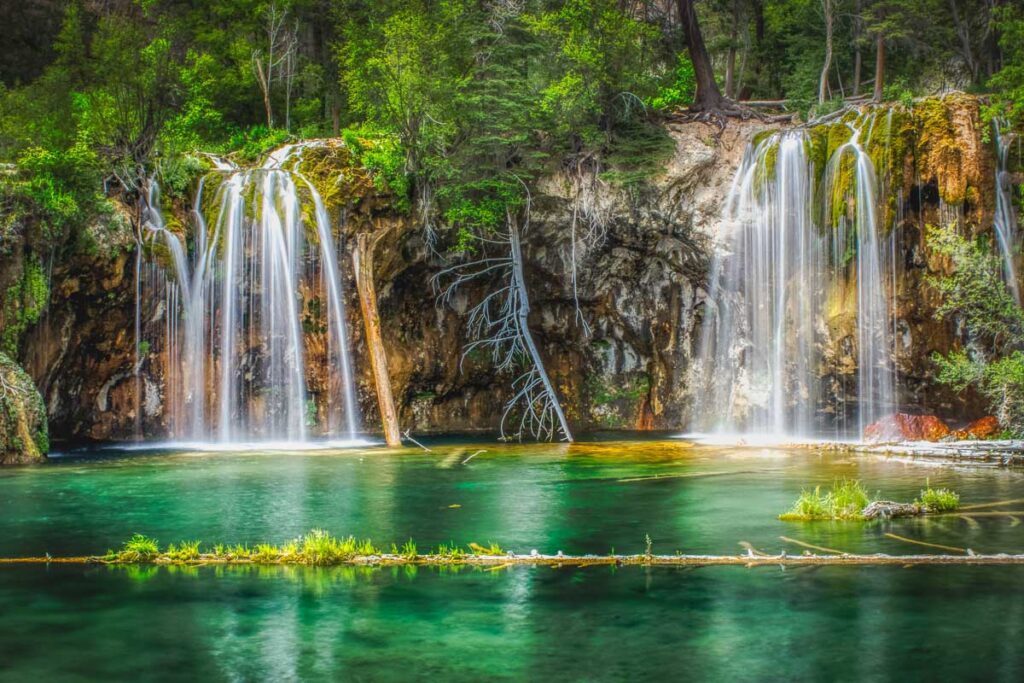
- Travertine cliff lake
Hanging Lake sits high above Glenwood Canyon in a bowl of green water with waterfalls dropping over moss covered travertine. It is small, but almost nothing about it looks ordinary.
Bridal Veil Falls spills directly into the lake, while mineral deposits have built delicate terraces along the water’s edge.
How to Visit: You can access Hanging Lake by hiking a steep and somewhat 1.2 mile challenging trail. To preserve its delicate ecosystem, only 615 visitors are allowed per day during peak season (May through October), so reserve your permit ahead of time. Additionally, no dogs or swimming is allowed in order to maintain the lake’s pristine condition.
Access is managed, so check the official Hanging Lake information before going.
3. Mono Lake, California

- Ancient saline lake
Mono Lake has limestone towers rising from salty water with the eastern Sierra Nevada sitting behind them. The formations are called tufa, and they developed where calcium rich freshwater springs reacted with the lake’s alkaline water.
The lake has no outlet, which has allowed salts and minerals to accumulate for hundreds of thousands of years. South Tufa is the classic place to walk among the formations, especially when low morning light starts throwing long shadows across them.
How to Visit: You can access the lake via state highway 395 and take a scenic drive around its shores or hike through the Mono Lake Tufa State Natural Reserve for a closer look at the Tufa towers. Note the closer you get, the lake is filled with bugs and can smell not the most pleasant.
4. Diablo Lake, Washington
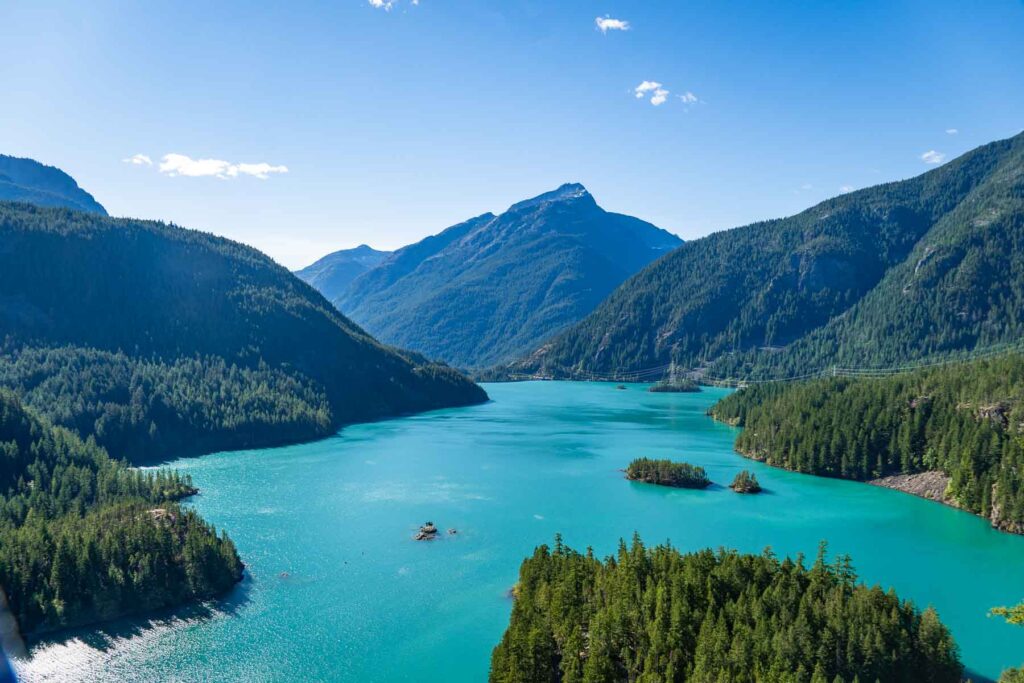
- Glacial turquoise reservoir
Perfect for a longer Pacific Northwest road trip, Diablo Lake has that almost fluorescent turquoise color that normally sends people straight to the saturation slider. The color comes from fine glacial sediment suspended in the water, while North Cascades peaks rise sharply around the reservoir.
The overlook on Highway 20 gives you the famous view, but paddling puts you much closer to the steep forested shoreline. Even though the lake is man made, the surrounding mountains make that fact surprisingly easy to forget.
5. Crater Lake, Oregon
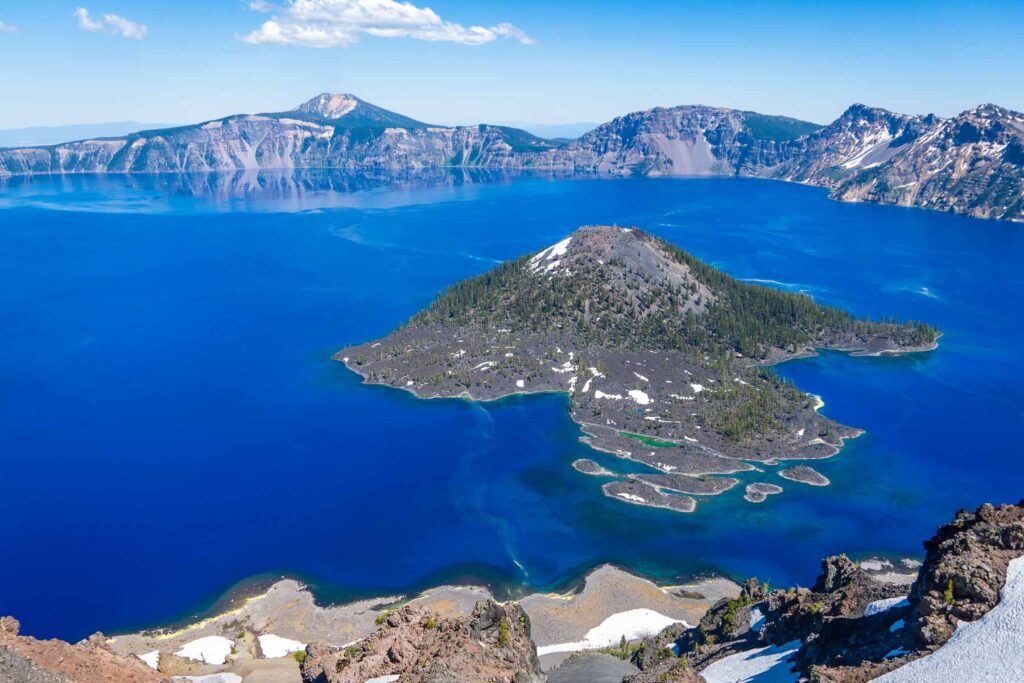
Crater Lake is a mesmerizing natural wonder formed over 7,700 years ago when Mount Mazama erupted and collapsed. At 1,943 feet deep, it is the deepest lake in the United States and one of the clearest and most pristine lakes in the world.
The captivating blue color of Crater Lake is due to its incredible depth and clarity, which allows most of the sunlight to be absorbed by the water, reflecting only the blue spectrum back to our eyes. This lake is not fed by rivers or streams but relies on rain and snowfall, making its waters remarkably clear.
How to Visit: From mid-June to late-September, visitors can drive around the full rim road of the lake to all the viewpoints. It’s also possible to hike or take a boat tour to Wizard Island, a cinder cone in the middle of the lake. In the winter months, you can partially drive around the lake and participate in activities such as snowshoeing or cross-country skiing.
📖 Read Also: Perfect One Day in Crater Lake Itinerary for First-Timers
6. Canyon Lake, Arizona
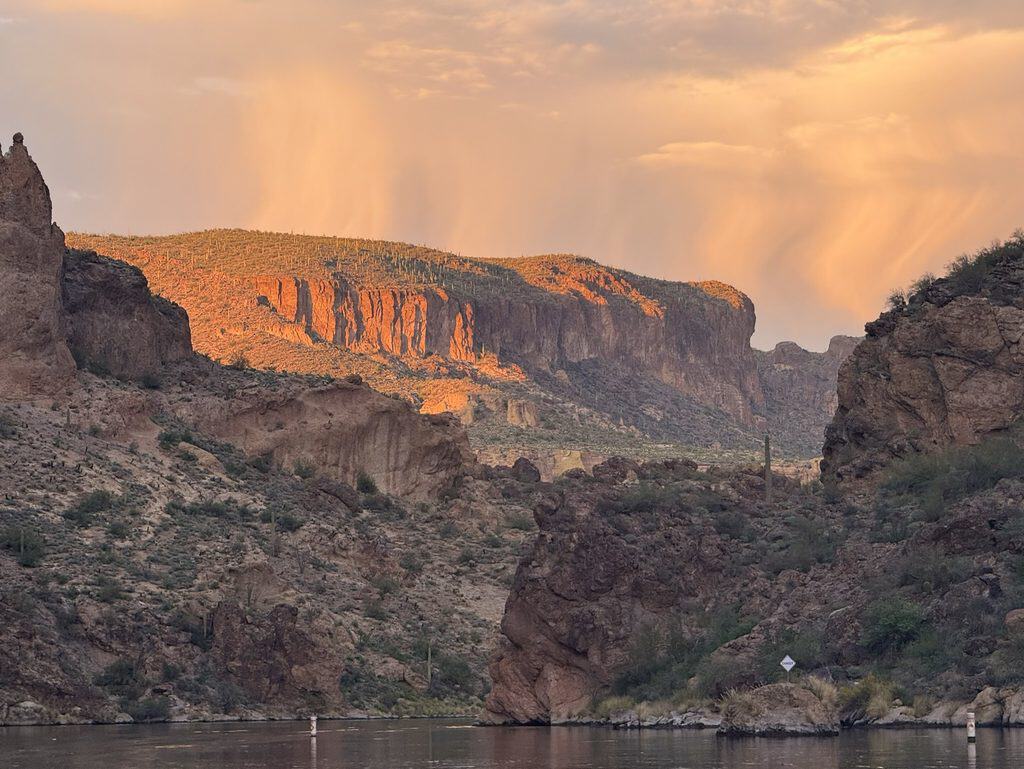
- Desert canyon reservoir
Canyon Lake is what happens when blue water gets squeezed between the cliffs of the Superstition Mountains. The eastern end winds through steep canyon walls with desert rock dropping almost directly into the lake. If you find a guy with a boat, speeding through the slots of the lake through sunset is one of the most beautiful experiences I’ve had in America.
The Apache Trail approach adds to the whole thing especially if you’ve got an off-road vehicle, with cactus covered slopes replacing the pine forests surrounding most American lakes. Boats can disappear around bends in the canyon and suddenly look tiny beneath the walls.
7. Caddo Lake, Texas and Louisiana

- Cypress swamp lake
Caddo Lake barely resembles the lakes most people picture when they hear the word. Bald cypress trees rise directly from a maze of dark bayous with Spanish moss hanging from their branches.
Kayaking is the way to see it because narrow waterways disappear between flooded trees and floating vegetation. Morning fog can make parts of the lake look far more mysterious than somewhere sitting along the Texas and Louisiana border has any right to.
How to Visit: Take a guided boat tour or rent a canoe or kayak for a self-guided adventure. You can also visit nearby historic towns such as Jefferson, Texas, and see remnants of the steamboat era. Caddo also gives you a great excuse to explore Louisiana beyond New Orleans and eat Cajun cuisine while you’re in the area!
8. Lake McDonald, Montana

- Glacial mountain lake
Lake McDonald’s shoreline is covered with smooth stones in reds, greens, grays, and purples rather than plain brown gravel. Iron and other minerals in Glacier National Park’s ancient rocks created those colors long before anyone started photographing them through clear water.
As one of the most epic Montana road trip stops, the lake stretches about ten miles beneath mountain ridges on the western side of Glacier National Park. Calm mornings can turn those mountains into near perfect reflections while the colored rocks remain visible below the surface.
9. Lake Haiyaha, Colorado
- Milky turquoise alpine lake
Lake Haiyaha got dramatically stranger after a major rockslide in Chaos Canyon sent huge amounts of finely ground sediment into the water. Those suspended particles scatter light and changed the lake to a milky blue green color that can look almost artificial.
A Colorado hiking favorite, the lake sits inside Rocky Mountain National Park beneath huge boulders, with the strange water color doing most of the work once you arrive. Nobody knows exactly how long the current color will persist, which makes this one feel unusually temporary.
10. Pyramid Lake, Nevada
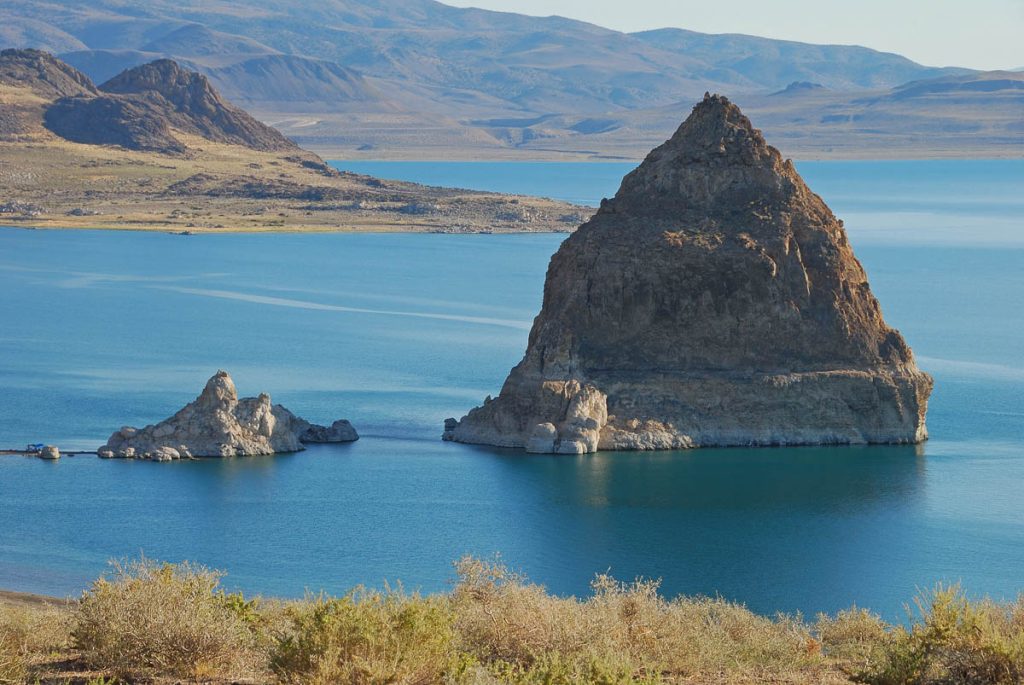
- Desert tufa lake
Pyramid Lake sits in an open Nevada desert with pale limestone formations rising from the water. Pyramid Rock gives the lake its name, while other tufa formations around the shore add shapes that feel completely out of place beside all that bare desert.
The lake is also much larger than many first time visitors expect, covering a huge patch of the Great Basin north of Reno. There are almost no forests softening the edges, which leaves water, rock, sky, and distant mountains doing all the visual work.
11. Jenny Lake, Wyoming
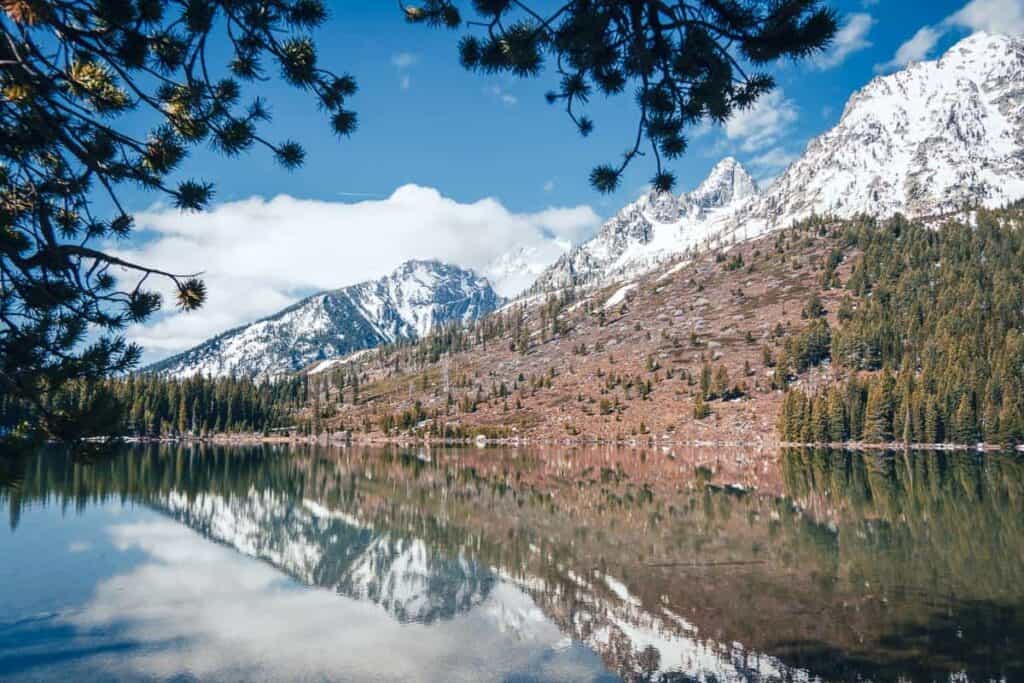
- Teton alpine lake
Jenny Lake earns its spot because the Tetons appear to rise almost straight out of the western shoreline. There is very little visual buildup between water and mountain, so the peaks dominate the entire scene.
A boat shuttle crosses the lake toward Hidden Falls and Inspiration Point, while the full shoreline trail keeps changing the angle on Teewinot Mountain and Cascade Canyon. The lake was carved by glaciers and still sits right at the base of the range.
12. Lake Clark, Alaska
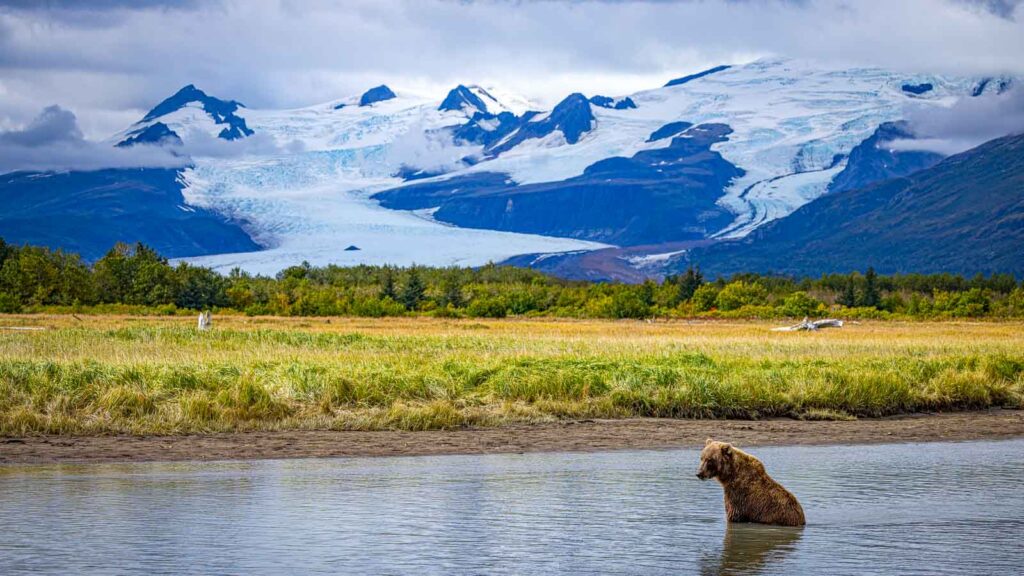
- Remote glacial wilderness lake
Lake Clark sits between rugged mountains in a national park with no road connecting it to the rest of Alaska. Bush planes are part of the transportation plan, which keeps the shoreline dramatically quieter than most lakes this size.
Glaciers and active volcanoes shape the surrounding region, while turquoise lakes sit beneath the Chigmit and Neacola Mountains. The namesake Lake Clark is also the largest lake by volume in the National Park Service system.
That remoteness helps explain why Lake Clark belongs among America’s most underrated national parks.
13. Lake Tahoe, California and Nevada
- Deep alpine lake
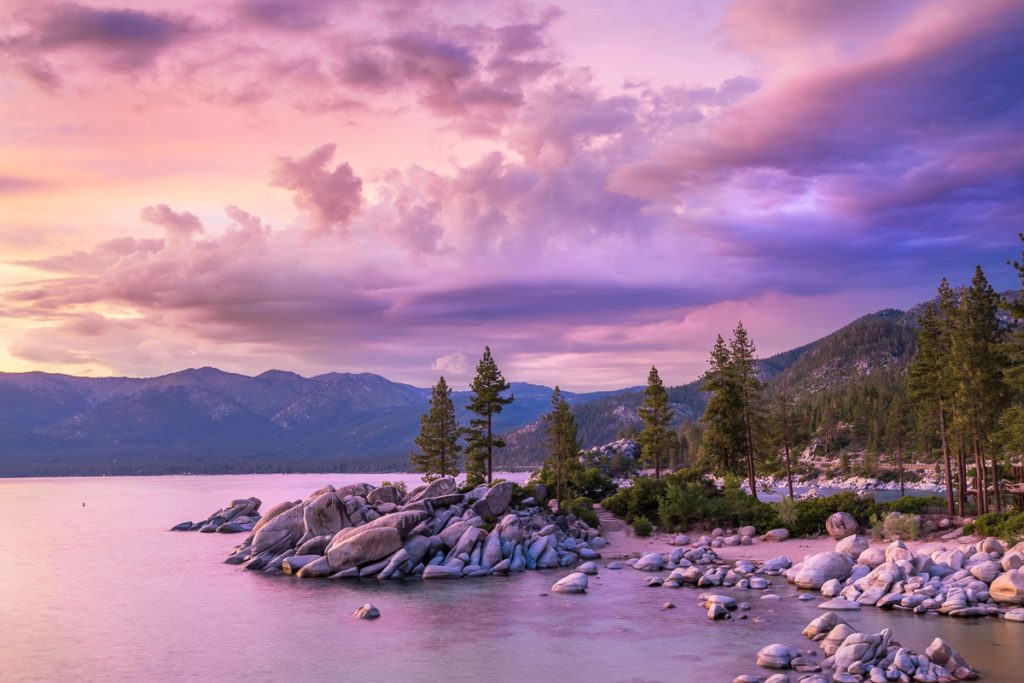
Straddling the border between California and Nevada, Lake Tahoe is one of the most popular destinations on the West Coast. With its sparkling blue waters completely surrounded by snow-capped mountains, it is the largest alpine lake in North America and the second deepest lake in the United States.
Tahoe is famous enough that it almost got cut for being too obvious, but Emerald Bay saves it. A tiny island, granite cliffs, deep blue water, and forested mountains make that corner of the lake immediately recognizable.
How to Visit: This year-round paradise offers everything from skiing and snowboarding at some of the best ski resorts in the country in the winter to hiking, kayaking, and beach lounging in the summer. Take a helicopter tour to see a full panorama or a Tahoe boat tour for the full experience.
You can access the lake from either California or Nevada, with numerous resorts and campsites dotting its shores.
📖 Read Also: Day Trip to Lake Tahoe: One Day Itinerary for All Seasons
14. Bear Lake, Utah and Idaho
- Calcium blue mountain lake
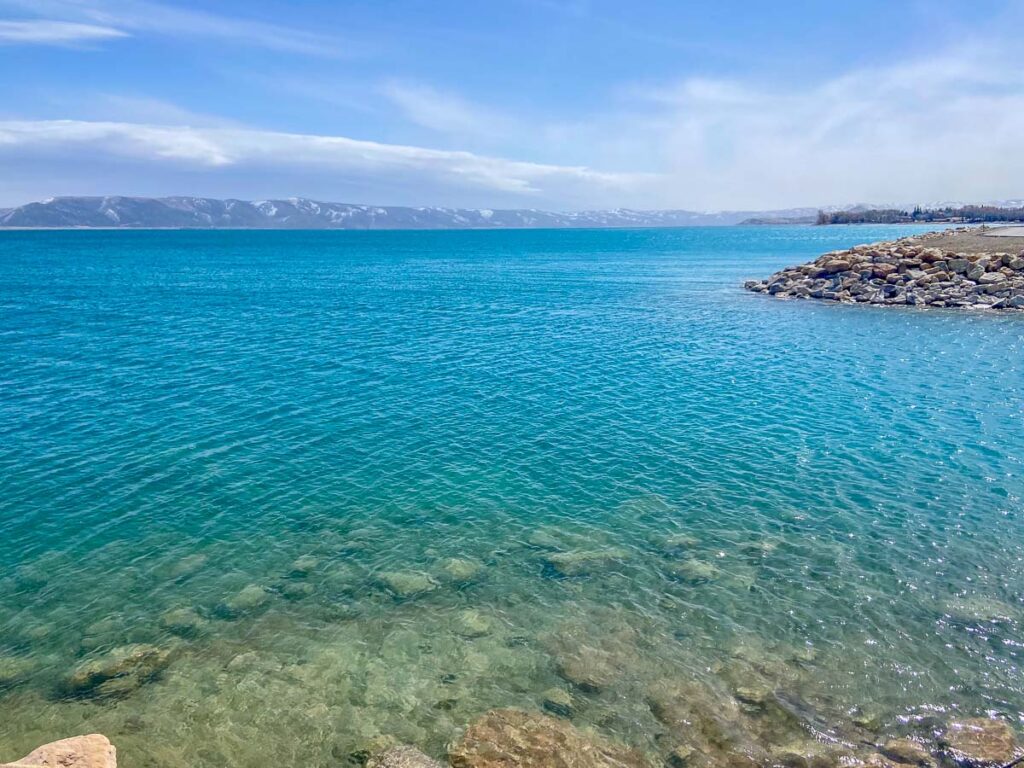
Bear Lake gets an unusually bright blue green color from suspended calcium carbonate particles. Utah State Parks even points to those particles as the reason the water looks so different from nearby reservoirs.
The lake stretches across the Utah and Idaho border beneath rounded mountain slopes, with broad beaches around parts of the shoreline. On a clear summer day, the color can look much more tropical than something sitting nearly 6,000 feet above sea level.
15. Thousand Island Lake, California
- Island filled alpine lake
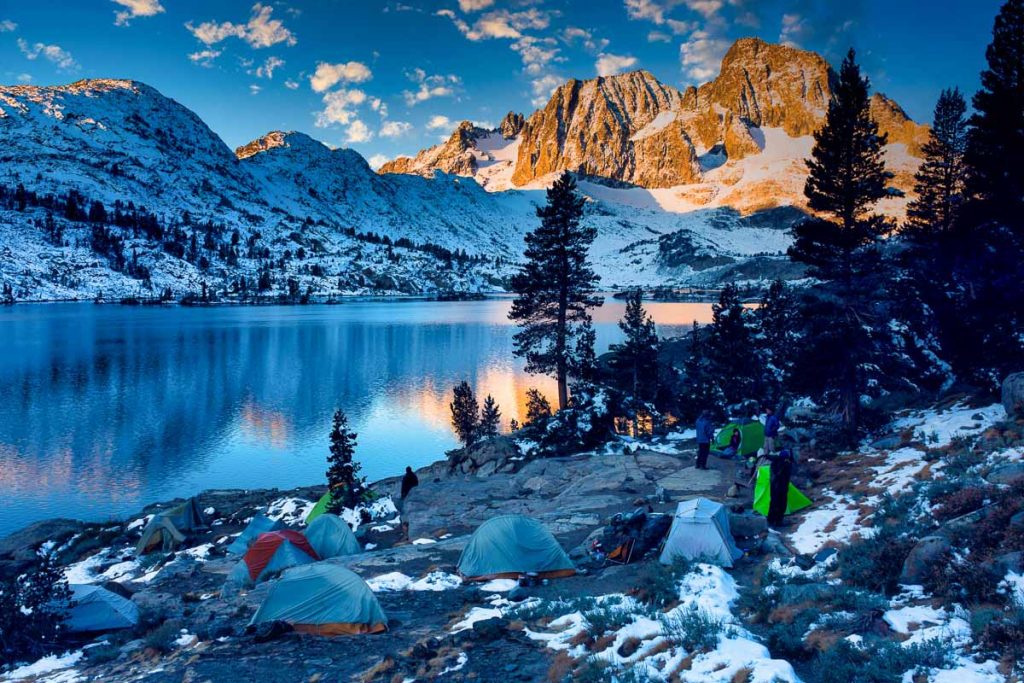
Thousand Island Lake earns its name from the granite islets scattered across its surface, though nobody should expect someone to have carefully counted exactly 1,000. Banner Peak rises behind the lake and gives the whole basin one of the strongest mountain backdrops in the Sierra Nevada.
You have to hike into the Ansel Adams Wilderness to reach it, which removes parking lots and lakeside development from the scene. Sunrise is particularly good when the first light catches Banner Peak before reaching the lake.
16. Torch Lake, Michigan
- Caribbean colored inland lake
One of Michigan’s most overlooked places, Torch Lake looks completely wrong for Michigan when the sun hits the shallows. Bright turquoise water around the sandbars fades into deep blue farther out, giving northern Michigan a color palette people normally associate with tropical islands.
The lake stretches for nearly 19 miles and has become especially known for its huge summer sandbar gatherings. Get away from the busiest weekends and the clear water becomes the actual headline again.
17. Watson Lake, Arizona
- Granite boulder lake
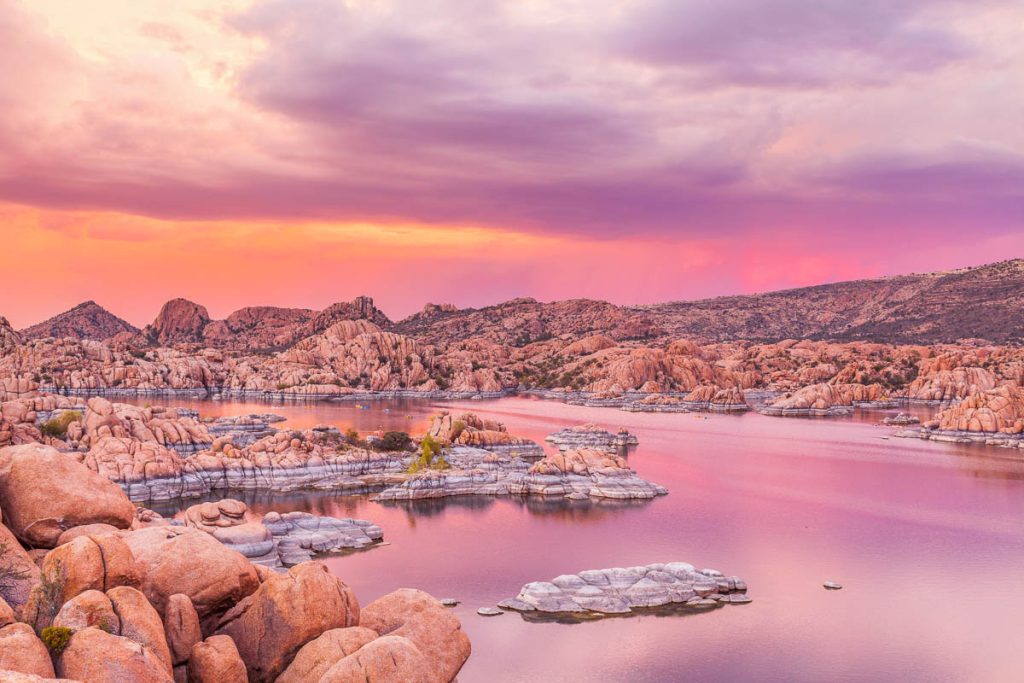
Watson Lake looks completely different from the cactus filled desert scenery people usually associate with Arizona. Deep blue water snakes between huge rounded granite formations in the Granite Dells just a few miles outside downtown Prescott.
The lake was created in 1915 when Granite Creek was dammed, but the surrounding rock is what makes it worth adding here. Kayakers can paddle into narrow passages between the boulders, while trails climb over the Dells for views where chunks of granite seem to rise straight out of the water.
18. Lake Jocassee, South Carolina
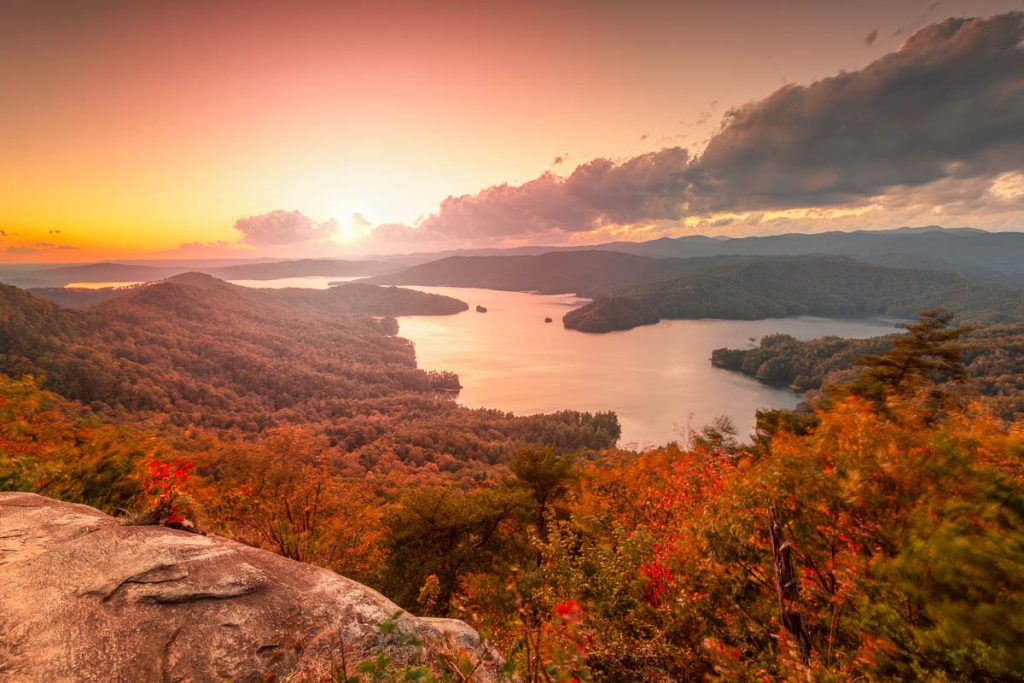
- Waterfall fed mountain lake
Lake Jocassee hides waterfalls at the ends of forested coves, with several dropping directly toward the lake. Clear blue green water and steep Blue Ridge foothills make it feel far more remote than its South Carolina location might suggest.
Much of the shoreline remains undeveloped, so boats and kayaks can reach sections that look almost untouched from the water. The lake is also deep enough that scuba divers come here to explore what disappeared beneath it when the reservoir was created.
19. Great Salt Lake, Utah

- Hypersaline desert lake
Great Salt Lake finishes the list because there really is nothing else in the country quite like it. Mountains rise beyond an enormous sheet of salty water while islands break up the horizon across one of the driest parts of Utah.
Some areas can shift toward pink or reddish tones when salt loving microorganisms become concentrated, while vast salt crusts appear where water has retreated. Antelope Island adds bison, empty beaches, and some of the best sunset views across the lake.
How to Visit: The Great Salt Lake is easily accessible from Salt Lake City and offers various activities such as swimming, kayaking, and hiking around the lake’s shoreline. You can also take a trip to visit Antelope Island State Park, located within the lake and home to diverse wildlife such as bison, pronghorn antelope, and over 250 species of birds.

Catherine, a seasoned travel writer, has lived in 4 different states and explored 36 states and 28 national parks. After spending two years embracing van life, she's now dedicated to sharing her vast knowledge of day trips across America. Catherine's other works has been referenced in major publications like MSN, Self, and TripSavvy.
| MY FAVORITE TRAVEL RESOURCES |
✈️ Find amazing guided tours and experiences with Viator to maximize your time! 🏘️ Plan ahead and secure your accommodation with Booking.com in advance. 🧾 Rent a car with Discovercars in advance and get the best prices for your day trip adventures. |