
16 Best National Parks to Visit in July That Will Make You Forget the Beach


July is when the national park map finally opens up in places that spend most of the year buried in snow. Alpine roads clear, Alaska hits its short summer window and trails that were inaccessible a month earlier can suddenly be packed with hikers.
After logging thousands of miles during summer and visiting 31 national parks, I learned quickly that July is not the month to chase desert scenery. The northern Rockies, Pacific Northwest and Alaska make far more sense when southern parks are dealing with punishing heat. Some of these best National Parks to visit in July also have such short seasons that it may be your best shot at seeing their high country at all.
Each park was evaluated based on weather, crowd patterns, trail availability, road openings, and real-world travel experience.
Important note: Road conditions in national parks change often and aren’t reflected here. Always check the National Park Service website for the latest closures when planning your trip.
June still catches several mountain parks in the middle of snowmelt, so the best parks earlier in summer look a little different. By August, more high trails are clear in the best national parks later in summer.
1. Glacier National Park, Montana

- Why July: Going to the Sun Road typically opens by early July, unlocking the park’s entire 50 mile spine.
- Glacier Weather: Daytime highs usually land near 75°F, with much cooler mornings around Logan Pass.
Glacier covers more than one million acres, but a surprising amount of it is difficult to reach until summer finally wins the battle with snow. Going to the Sun Road climbs to Logan Pass at 6,646 feet before dropping toward St. Mary Lake, opening access to Hidden Lake Overlook and the Highline Trail along the way.
Avalanche Lake and other lower trails are already busy by July, while higher routes continue clearing as the month progresses. If you are trying to cover Glacier in a single day, the road itself becomes a huge part of the trip.
Snowmelt keeps St. Mary Falls and Virginia Falls moving fast, and boat tours run on Lake McDonald and St. Mary Lake. Glacier also anchors some of the best mountain scenery in Montana, so July is very much peak road trip territory.
2. Yellowstone National Park, Wyoming

- Why July: All five park entrances and the full Grand Loop Road are reliably open.
- Yellowstone Weather: Highs average around 73°F, with afternoon storms possible at higher elevations.
Yellowstone covers 3,472 square miles, so trying to conquer the entire park in one day usually turns into far too much time behind the wheel. July at least removes most seasonal road problems, putting Old Faithful, Grand Prismatic Spring, Yellowstone Lake and the Grand Canyon of the Yellowstone within reach.
Warm weather brings out the intense color around Grand Prismatic, while Lamar and Hayden Valleys are best around sunrise or evening when animals are more active. A bison traffic jam can still destroy your schedule, but that is a very Yellowstone problem to have.
If you have one day in Yellowstone, stick to one side of the Grand Loop rather than racing between every famous stop. Travelers approaching from Montana can also use Yellowstone tours from Bozeman to cover the major sights without spending the whole day watching the map.
3. Lassen Volcanic National Park, California
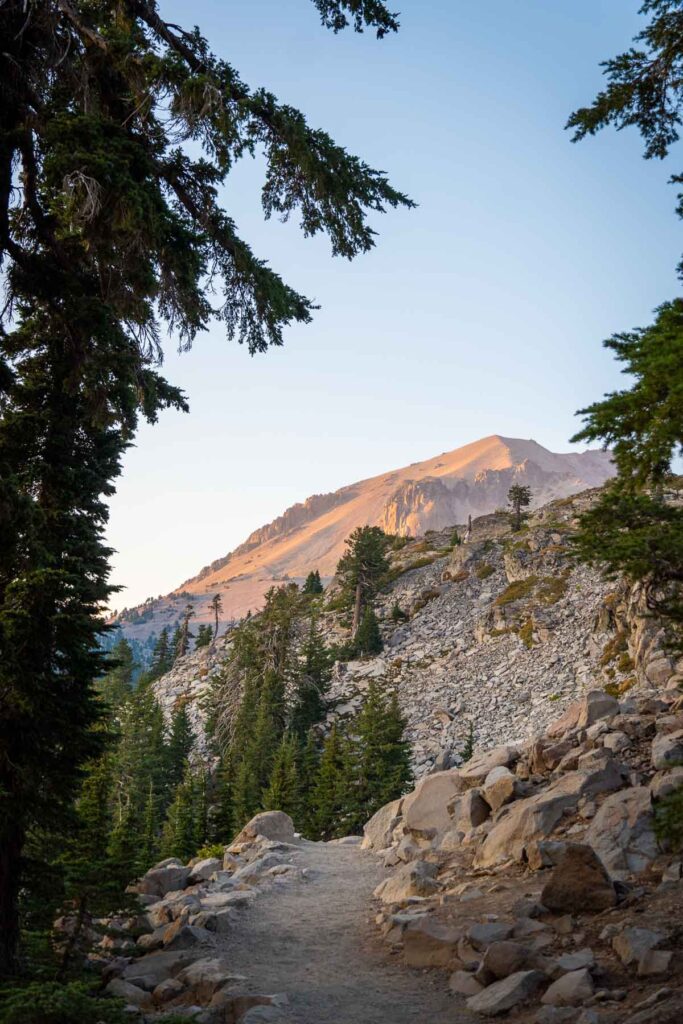
- Why July: Highway 89 through the park usually opens end to end after heavy winter snowfall.
- Lassen Volcanic Weather: Daytime temperatures hover around 70°F, with cooler nights above 6,000 feet.
Lassen packs all four major volcano types into one national park, which already gives it a fairly unusual geological résumé. July is when Highway 89 normally opens from end to end and Bumpass Hell becomes reachable again after the snow retreats.
Lassen Peak is also more realistic this month once the summit trail starts clearing. Manzanita Lake is thawed for paddling, while Kings Creek Falls can still carry plenty of water from late snowmelt.
If you have one day to explore, the park highway connects a surprising number of volcanic features. There are also plenty of other things around Lassen if geothermal areas are the main reason you came.
4. Grand Teton National Park, Wyoming
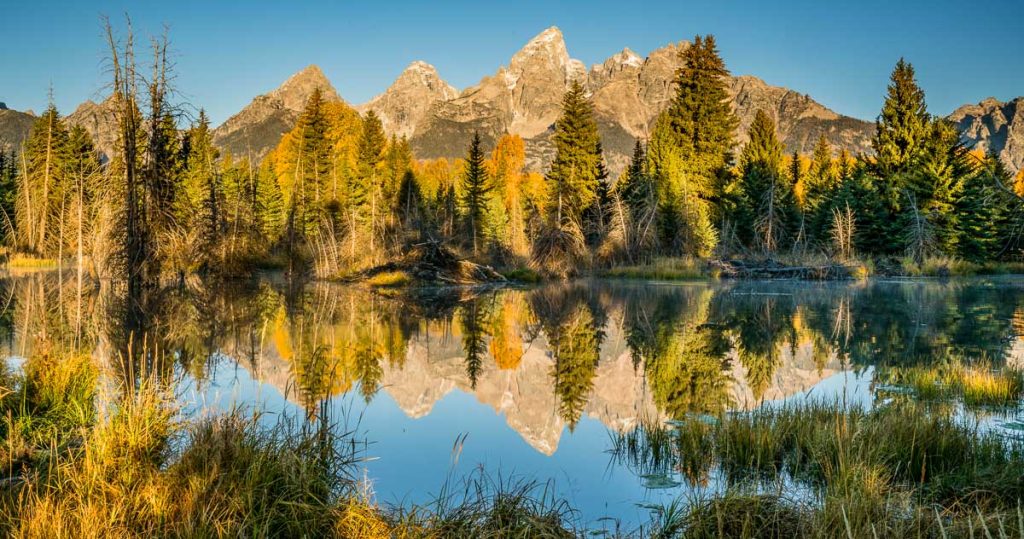
- Why July: Snow finally clears from high elevation trails near Cascade Canyon.
- Grand Teton Weather: Highs average around 78°F, with cold mornings along the Snake River.
The Tetons shoot more than 7,000 feet above Jackson Hole with almost no foothills in front of them, which explains why even roadside stops can steal half an hour. July clears many of the trails around Jenny Lake and Cascade Canyon while wildflowers start spreading through Lupine Meadows.
The Jenny Lake boat shuttle cuts mileage from the walk to Hidden Falls and Inspiration Point, and Snake River float trips run throughout the summer. Schwabacher Landing and Oxbow Bend are worth hitting early before the light gets harsher and parking fills.
A day around Grand Teton can fit Jenny Lake, Mormon Row and several roadside viewpoints without feeling frantic. Jackson Hole also works as a base for Yellowstone tours from Jackson Hole, which makes the two parks easy to pair on the same Wyoming trip.
5. Rocky Mountain National Park, Colorado
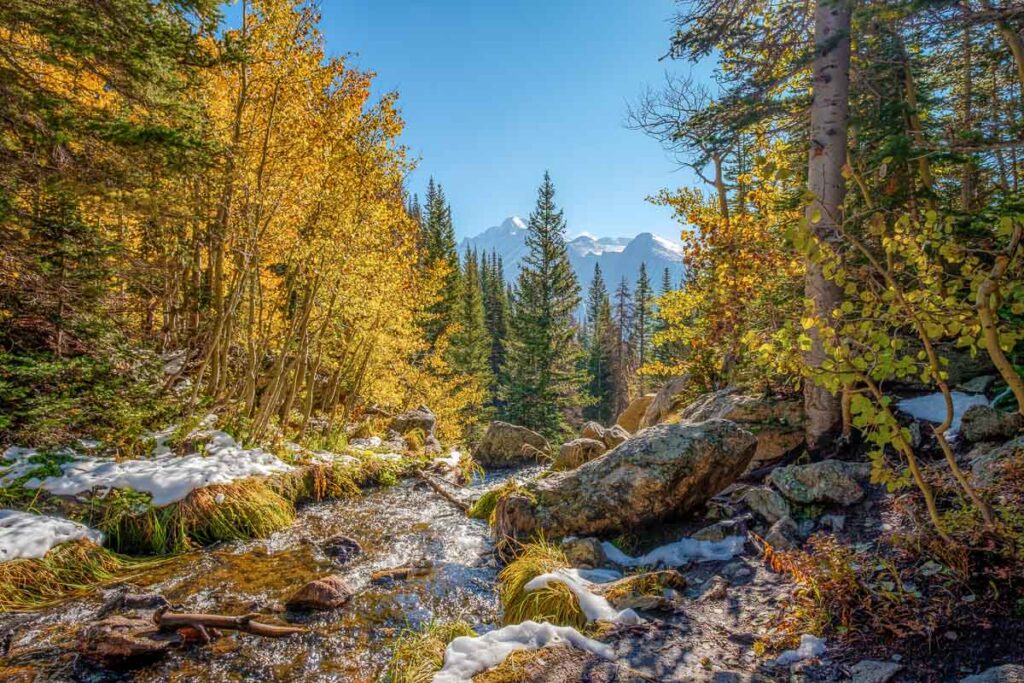
- Why July: Trail Ridge Road reliably stays open at 12,183 feet.
- Rocky Mountain Weather: Daytime highs reach around 70°F at lower elevations, with much colder conditions above tree line.
Trail Ridge Road climbs to 12,183 feet, making July one of the short periods when you can drive straight into Rocky Mountain National Park’s alpine tundra. Snow can still survive beside the road even while Estes Park is having a warm summer afternoon.
Bear Lake Corridor trails to Dream Lake and Emerald Lake are fully active, while longer hikes toward Sky Pond pull in early morning crowds. Afternoon thunderstorms are common enough that high elevation starts should happen early.
A day in Rocky Mountain can split time between Bear Lake and Trail Ridge Road. Timed entry rules may also apply during peak summer hours, so this is not a park where showing up at noon without a plan works particularly well.
6. Olympic National Park, Washington

- Why July: Hurricane Ridge facilities and mountain roads are fully open after winter closures.
- Olympic Weather: Daytime temperatures usually sit in the mid 60s°F near the coast and get cooler higher in the mountains.
Olympic manages to fit glacier covered mountains, temperate rainforest and Pacific coastline inside the same park boundary. July is one of the easiest months to move between all three without winter weather closing off the mountain sections.
Hurricane Ridge trails open for summer while the Hoh Rain Forest sees far less rain than it does in winter. Rialto and Ruby Beach also get long evenings, which makes planning around low tide much easier.
A day around Olympic still requires choosing one region rather than trying to circle the whole peninsula. Olympic is only one piece of the wild scenery across Washington, but it manages to pack an unreasonable amount of it inside one park.
7. Yosemite National Park, California
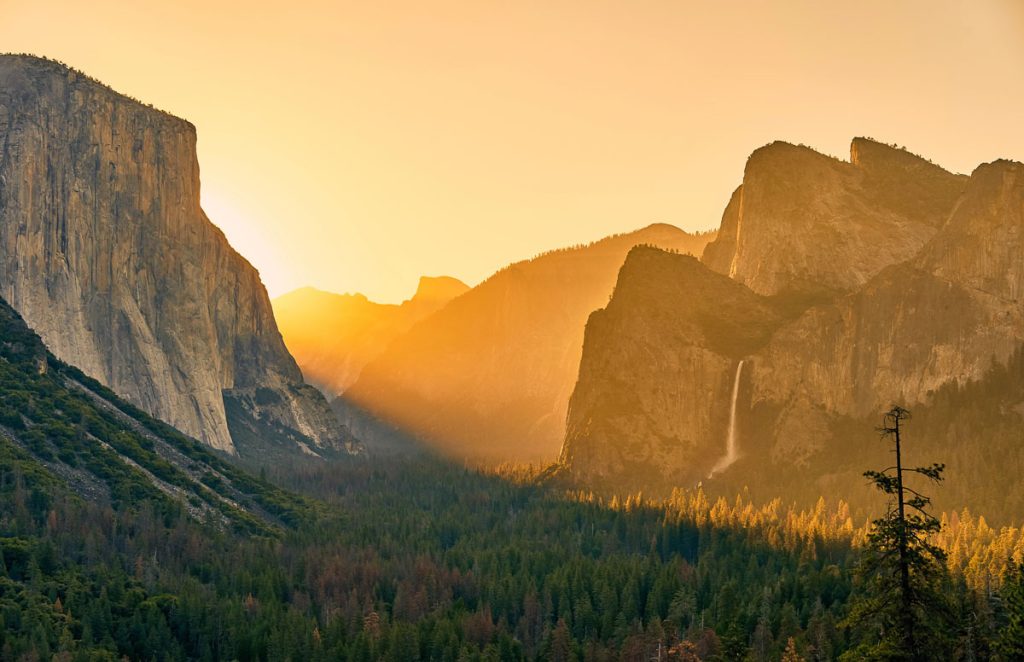
- Why July: Tioga Road typically opens, restoring access to the park’s high elevation east side.
- Weather: Yosemite Valley highs average around 80°F, with cooler conditions along Tioga Road.
Yosemite gets more than four million visitors in a busy year, and July is not the month you accidentally stumble into an empty valley. The payoff is access. Tioga Road normally opens the high country around Tuolumne Meadows, Cathedral Lakes and Tenaya Lake after months of snow closures.
Glacier Point Road is usually open too, giving you a completely different angle over Yosemite Valley. Waterfalls begin losing some spring power, although Yosemite Falls can still carry lingering snowmelt.
If time is tight, these Yosemite tours keeps the day centered on the major stops. July is better used for the higher country if you have already seen the valley before.
8. Sequoia and Kings Canyon National Parks, California

- Why July: High elevation roads and giant sequoia groves are fully open.
- Sequoia Weather: Daytime temperatures average in the mid 70s at Lodgepole, cooler higher up.
General Sherman is not the tallest tree on Earth, but by volume it holds the title as the largest known living single stem tree. July gives you full access to Giant Forest and the higher roads connecting much of Sequoia and Kings Canyon.
Moro Rock opens up sweeping views after a very steep staircase, while the Kings Canyon Scenic Byway runs toward Cedar Grove. Tokopah Falls can also hold good flow from lingering snowmelt.
A day in Sequoia works well if giant trees are the priority. Kings Canyon adds far more driving, so trying to thoroughly cover both parks in a single day gets ambitious fast.
9. Denali National Park, Alaska

- Why July: This is the warmest month of the year.
- Weather: Daytime highs typically range between 60°F and 65°F.
Denali rises 20,310 feet above sea level, making it the highest mountain in North America. July is the heart of the short Alaska summer, when snow has cleared from many lower trails and bus transportation runs deeper along the park road.
Horseshoe Lake and Mount Healy Ridge are accessible from near the entrance area. Ranger programs also run regularly during the height of the visitor season.
Most travelers stay close to the park entrance because private vehicle access becomes restricted farther along the road. Denali is also one reason Alaska has so many places that look almost impossible on a map, with tundra and enormous mountains sharing the same horizon.
10. Wrangell–St. Elias National Park, Alaska
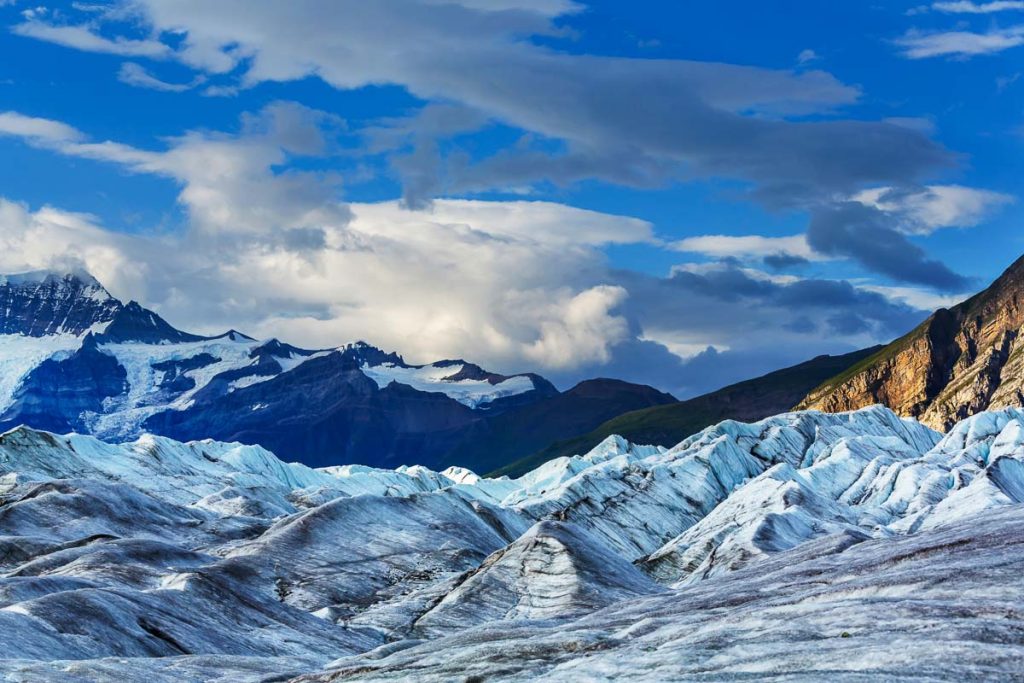
- Why July: Snow retreat allows access to interior routes, airstrips, and historic mining areas.
- Wrangell St. Elias Weather: Daytime temperatures usually stay near 60°F, with colder conditions at higher elevations.
At more than 13 million acres, Wrangell St. Elias is the largest national park in the United States. That makes Yellowstone look fairly compact by comparison, and July is one of the few months when reaching the interior becomes relatively practical.
McCarthy Road leads toward the old mining communities around McCarthy and Kennecott once spring breakup has passed. From there, the Root Glacier can be reached on foot and guided glacier trips run during summer.
Flightseeing also picks up during the long July days. This is still remote Alaska, though, so the trip requires much more planning than pulling into a roadside national park entrance
11. Kenai Fjords National Park, Alaska

- Why July: Boat tours operate daily with expanded routes into major fjords.
- Kenai Fjords Weather: Highs average near 58°F, with marine fog common during early mornings.
Kenai Fjords protects more than 600,000 acres shaped by the massive Harding Icefield. July is when boats from Seward regularly head toward Aialik Glacier and farther fjords that are difficult to reach during rougher parts of the year.
Exit Glacier gives you the easier land based option, while the Harding Icefield Trail climbs far above it. Longer daylight makes that steep hike easier to fit into the day.
Seward handles most lodging and tour departures, so the national park visit often starts at the harbor rather than a park gate. Even in July, waterproof layers belong in the bag because coastal Alaska does not care what the calendar says.
12. Katmai National Park, Alaska
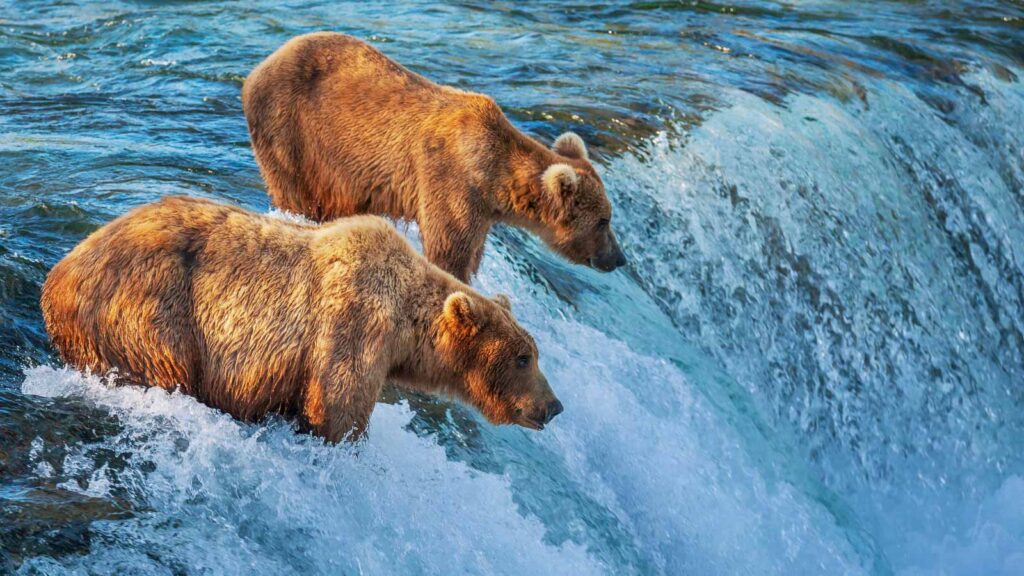
- Why July: Salmon runs begin drawing brown bears to Brooks Falls.
- Katmai Weather: Temperatures usually range near 60°F, with frequent rain and low cloud cover.
Brooks Falls has become one of the most recognizable wildlife viewing spots in the national park system because July can put multiple brown bears beside the same stretch of rushing water. Salmon begin pushing through the Brooks River system and the bears know exactly where to wait.
Getting there is the complicated part. Most visitors reach Katmai by floatplane from King Salmon, and weather can disrupt flights without much warning.
Lodge space and transportation are limited, which keeps Katmai very different from parks reached directly by highway. This is one of the rare places where the wildlife viewing is not a side activity. It is the reason many people make the trip.
13. Mount Rainier National Park, Washington
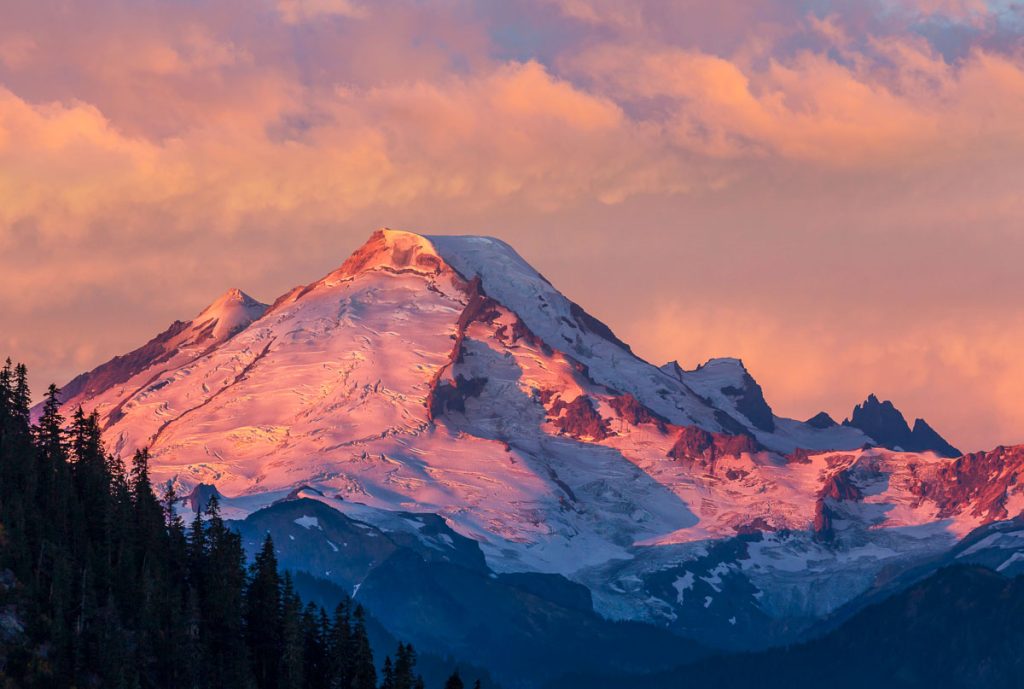
- Why July: Paradise and Sunrise areas reopen after winter closures.
- Mount Rainier Weather: Daytime highs range from 65°F to 70°F at higher visitor areas.
Mount Rainier reaches 14,410 feet and can dominate the western Washington skyline from more than 100 miles away on a clear day. July finally opens much of the terrain around Paradise, where Skyline Trail climbs through meadows toward glacier views.
Sunrise Road often opens later than Paradise, with trails around Sourdough Ridge following as the snow melts. Wildflowers can begin appearing around the meadows during the second half of the month.
If you only have one day at Rainier, Paradise usually gives you the biggest concentration of trails and views. Summer traffic is heavy enough that an early start matters almost as much as the weather.
14. North Cascades National Park, Washington

- Why July: State Route 20 becomes reliably passable through the park corridor.
- North Cascades Weather: Lower elevation highs average around 70°F, with colder alpine conditions.
More than 300 glaciers sit across the North Cascades, giving this mountain range one of the heaviest concentrations of ice in the lower 48. July is when State Route 20 makes the park corridor easy to explore again, with stops around Diablo Lake and Ross Lake fully accessible.
Cascade Pass is one of the big summer hikes, although snow can linger into July depending on the year. Ross Lake boat transportation also runs on its summer schedule.
A day through North Cascades can focus on overlooks and shorter trails along the highway. The turquoise reservoirs and sharp peaks also explain why this corner of Washington regularly lands among the state’s best looking mountain areas.
15. Badlands National Park, South Dakota

- Why July: Full access across Badlands Loop Road and interior scenic drives.
- Badlands Weather: Daytime highs often reach 90°F, with intense sun and fast moving thunderstorms.
Badlands exposes about 244,000 acres of striped buttes, pinnacles and eroded prairie, and July sunlight does not soften any of it. This is easily the hottest entry on the list, so sunrise and evening are much better times for hiking.
Badlands Loop Road connects Pinnacles Overlook with a long string of pullouts that require almost no walking. The lack of shade becomes obvious the moment you leave the car.
If you are passing through on a short Badlands trip, save longer walks for the cooler ends of the day. The park is one of the strangest entries among South Dakota’s best landscapes.
16. Crater Lake National Park, Oregon
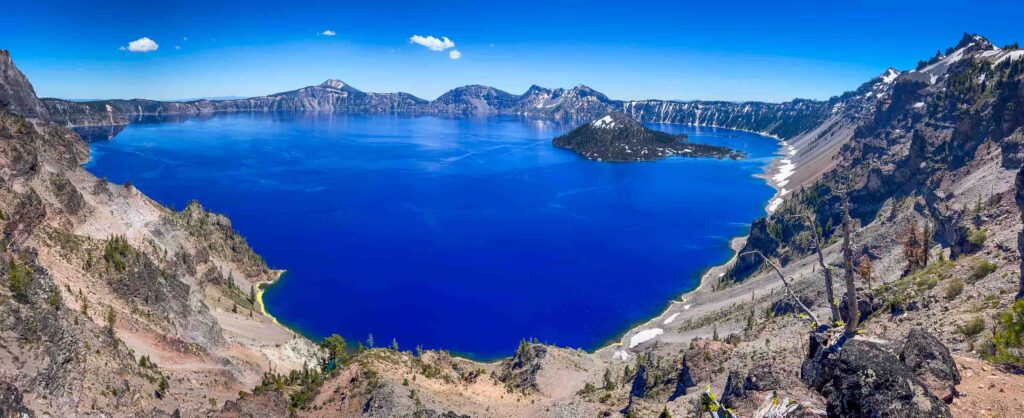
- Why July: Rim Drive usually opens completely for full lake circulation.
- Crater Lake Weather: Highs average near 75°F at rim elevation, with cool nights.
Crater Lake plunges 1,943 feet, making it the deepest lake in the United States. July is one of the first dependable months for circling the entire caldera on Rim Drive, with snowbanks sometimes still sitting beside the road.
The lake formed inside the collapsed remains of Mount Mazama and has no rivers flowing in or out. That geography helps produce the famously deep blue water seen from viewpoints around the rim.
A day at Crater Lake works particularly well once the full drive opens. Even in a state packed with waterfalls, coastline and volcanoes, Crater Lake holds its own among the best places to see in Oregon.
Catherine, a seasoned travel writer, has lived in 4 different states and explored 36 states and 28 national parks. After spending two years embracing van life, she's now dedicated to sharing her vast knowledge of day trips across America. Catherine's other works has been referenced in major publications like MSN, Self, and TripSavvy.
| MY FAVORITE TRAVEL RESOURCES |
✈️ Find amazing guided tours and experiences with Viator to maximize your time! 🏘️ Plan ahead and secure your accommodation with Booking.com in advance. 🧾 Rent a car with Discovercars in advance and get the best prices for your day trip adventures. |