
America’s 14 Best Cities for Hiking Where You Can Hit Epic Trails Without Leaving Town


When I first started traveling full-time, I used to think the best trails were always far from the city in remote, quiet areas, miles from cell service. But after vanlifing across 38 states and spending long stretches parked near major cities, I realized how many incredible hikes are hiding right inside urban limits. Some mornings I’d wake up surrounded by skyline views and be on a ridgeline trail within minutes.
That’s the beauty of America’s best cities for hiking: you don’t have to drive hours to find adventure. These 14 spots make it easy to swap morning traffic for mountain air, with trail networks that cut straight from sidewalks to summits.
1. Anchorage, Alaska
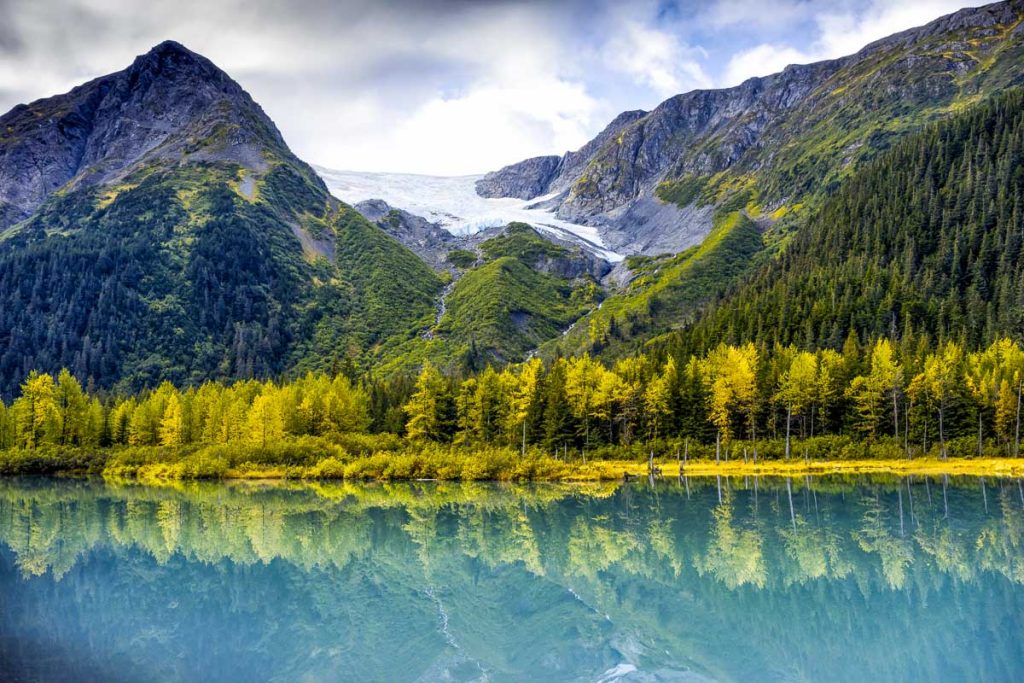
All of Alaska feels built for hikers, but Anchorage gives you at least some resemblance of civilization while putting enormous mountains practically in the backyard. The city and surrounding area have hundreds of miles of trails, including the roughly 11 mile Tony Knowles Coastal Trail along Cook Inlet.
Flattop Mountain is the classic local climb from Glen Alps, with a short but steep push toward a 3,510 foot summit. Keep going deeper into Chugach State Park and the scale changes quickly, with nearly half a million acres of mountains, valleys, lakes, and glacier country.
Summer daylight is one of my favorite parts of hiking this far north because you can stay outside absurdly late without reaching for a headlamp. Winter turns many of those same areas into snowshoe territory.
Anchorage is only one corner of a state packed with mountains, coastlines, and remote road trip stops that make the Lower 48 feel crowded.
2. Sedona, Arizona

Sedona puts trailheads so close to town that hiking becomes part of the daily routine almost by accident. Devil’s Bridge is one of the busiest routes, ending at a sandstone arch that people happily wait in line to photograph.
Cathedral Rock is shorter but steeper, with sections where your hands become useful on the climb. Soldier Pass gets you past the Seven Sacred Pools and into red rock backcountry without traveling far from town.
West Fork follows Oak Creek into a shaded canyon, making it one of my picks when Arizona temperatures start climbing. Parking and shuttle rules can complicate popular trailheads, especially on weekends.
Once you have worked through the famous hikes, Sedona makes a great base for exploring farther across northern Arizona. It also pays to choose your season carefully unless hiking in triple digit heat sounds fun for some reason.
3. Salt Lake City, Utah
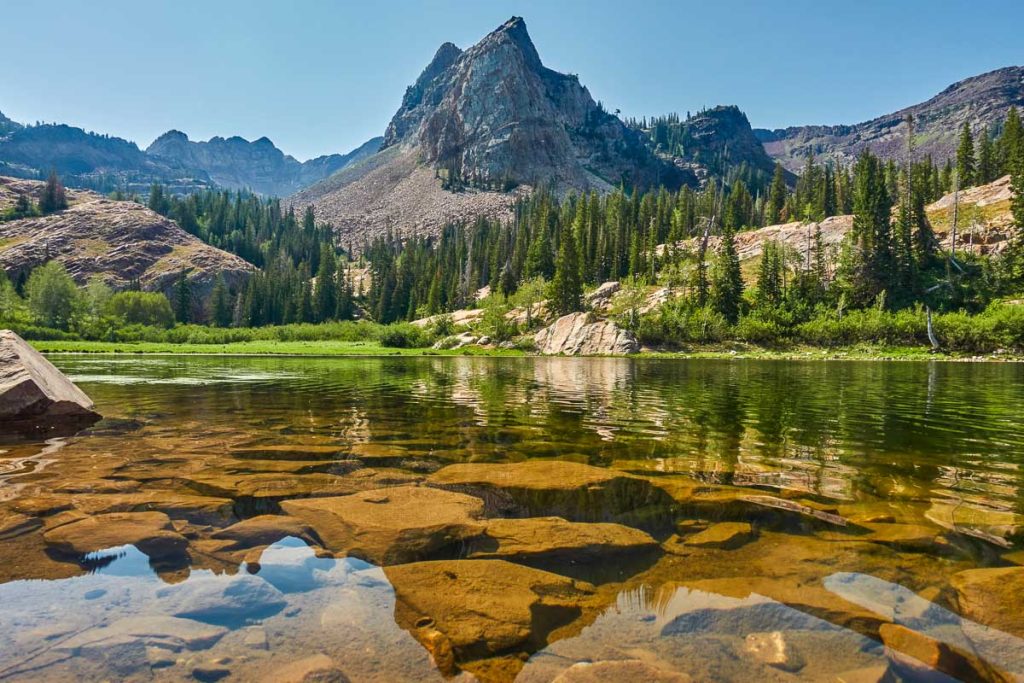
Salt Lake City has mountains that rise directly behind the neighborhoods. Big Cottonwood Canyon and Little Cottonwood Canyon put alpine lakes, steep climbs, and high elevation trailheads less than an hour from downtown.
Mount Olympus is the leg burner, climbing more than 4,000 feet in roughly 3.5 miles to the saddle. Lake Blanche is another local favorite, with a steady climb into a basin beneath Sundial Peak.
One of my favorite Utah detours was Fifth Water Hot Springs in Diamond Fork Canyon, where mineral pools sit beside the creek south of the city. It takes you away from the immediate Salt Lake trail system, but it was one of those stops I kept thinking about long after leaving.
The Wasatch is only the beginning since some of Utah’s best trail days head into completely different terrain farther south.
4. Boulder, Colorado
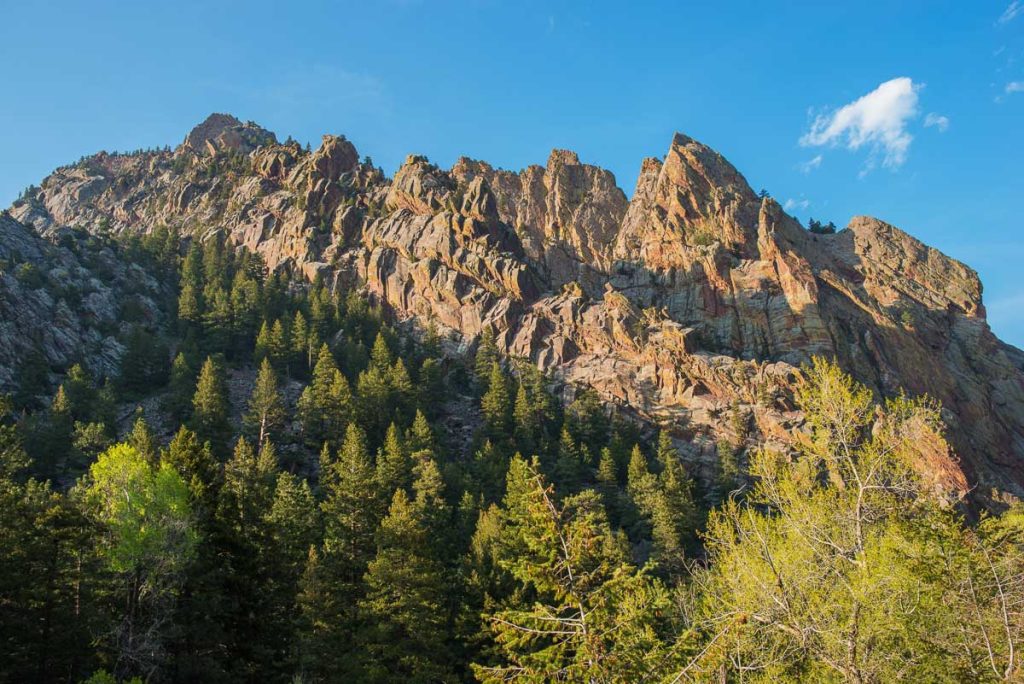
Boulder might have the best city to trail transition anywhere on this list. The Flatirons rise directly behind town, and trailheads around Chautauqua put you onto steep mountain paths before you have really left the neighborhoods behind.
Mount Sanitas is the quick punishment option, climbing roughly 1,300 feet in about 1.5 miles to the summit. The Royal Arch Trail starts near Chautauqua and climbs through the Flatirons to a huge natural sandstone arch, while Bear Peak pushes the elevation gain past 2,700 feet for a much harder day.
Boulder’s protected open space wraps around the city with more than 150 miles of maintained trails. That means hiking here does not feel like taking a day trip from town, it feels built into daily life.
Weather can change what is realistic surprisingly fast at this elevation, so choosing when to plan a Boulder trip matters if your main goal is hiking. If you have a full day, you can also combine the trails with downtown Boulder and the Flatirons without spending half the day driving.
5. Tucson, Arizona

Tucson is surrounded by mountains and has Saguaro National Park sitting on both sides of the metro area, which is a pretty unfair advantage for a hiking city. You can leave downtown and be walking among giant saguaros, rocky desert ridges, or pine forest depending on which direction you drive.
Wasson Peak is one of my favorite choices on the west side, reaching 4,687 feet above the cactus filled Tucson Mountains. On the east side, trails climb into the Rincon Mountains, while Sabino Canyon and Pusch Ridge push into steeper terrain north of town.
Then Mount Lemmon changes the entire landscape. The road climbs from Sonoran Desert to forests above 9,000 feet, which means you can escape brutal summer temperatures without leaving the Tucson area.
Some of the best hikes around Saguaro National Park start surprisingly close to the city, while quick trips beyond Tucson reach even more desert and mountain terrain. Just treat summer hiking seriously because Tucson heat can turn a normal trail into a bad idea very quickly.
6. Bellingham, Washington

Bellingham might not have Seattle’s size, but its northern location puts the Chuckanut Mountains right against the coast. Larrabee State Park sits just south of town, and its trails climb above Samish Bay toward views of the San Juan Islands.
Oyster Dome is the hike people keep recommending for good reason, with a rocky overlook high above the water. The Interurban Trail begins around Fairhaven and runs south through forest toward the Larrabee area, so you can cover a surprising amount of ground without heading deep into the Cascades.
Mount Baker is farther east when you want bigger mountain terrain, snowfields, and longer trail days. Bellingham itself also has far more to do than most travelers expect, which is partly why it works so well as an outdoor base.
Since this is northwest Washington, waterproof layers will probably earn their suitcase space.
7. Portland, Oregon

Portland has one of the best urban hiking setups I have found because you barely need to leave town. Forest Park covers roughly 5,200 acres and has more than 80 miles of trails, while its 30 mile Wildwood Trail runs through the heart of the park.
The route toward Pittock Mansion is a good choice when you want elevation and a city view at the end. On clear days, Mount Hood appears beyond the Portland skyline.
Across the river, Mount Tabor gives you trails across an extinct volcanic cinder cone right in the middle of residential Portland. It is the kind of place that makes a random weekday walk feel much less ordinary.
Portland itself can easily fill several days with stranger stops beyond the trailheads. Once you leave town, Oregon gets even wilder around the Columbia River Gorge, Mount Hood, and the Cascades.
8. Phoenix, Arizona

Phoenix is desert, but one of the best city hikes I have done was summiting Piestewa Peak at night. It is brutally steep for such a short trail, climbing roughly 1,200 feet in just over a mile to the summit.
The official Piestewa Peak trail information lists the summit route as extremely difficult, which feels pretty accurate once those endless rocky steps start. Camelback Mountain is another steep local test, while South Mountain Preserve gives you a much larger trail network south of downtown.
McDowell Sonoran Preserve expands the options around Scottsdale, and Papago Park works when you want something shorter. If you want volcanic terrain, Sunset Crater is farther north near Flagstaff, so I would treat that as a full day trip rather than a quick Phoenix hike.
There are plenty of desert escapes beyond the city, and even Phoenix ATV trips reach terrain that shows just how quickly the pavement disappears once you leave the metro area.
Just remember, this is Phoenix, so pack extra water if you’re heading up anytime in the summer months.
9. Albuquerque, New Mexico
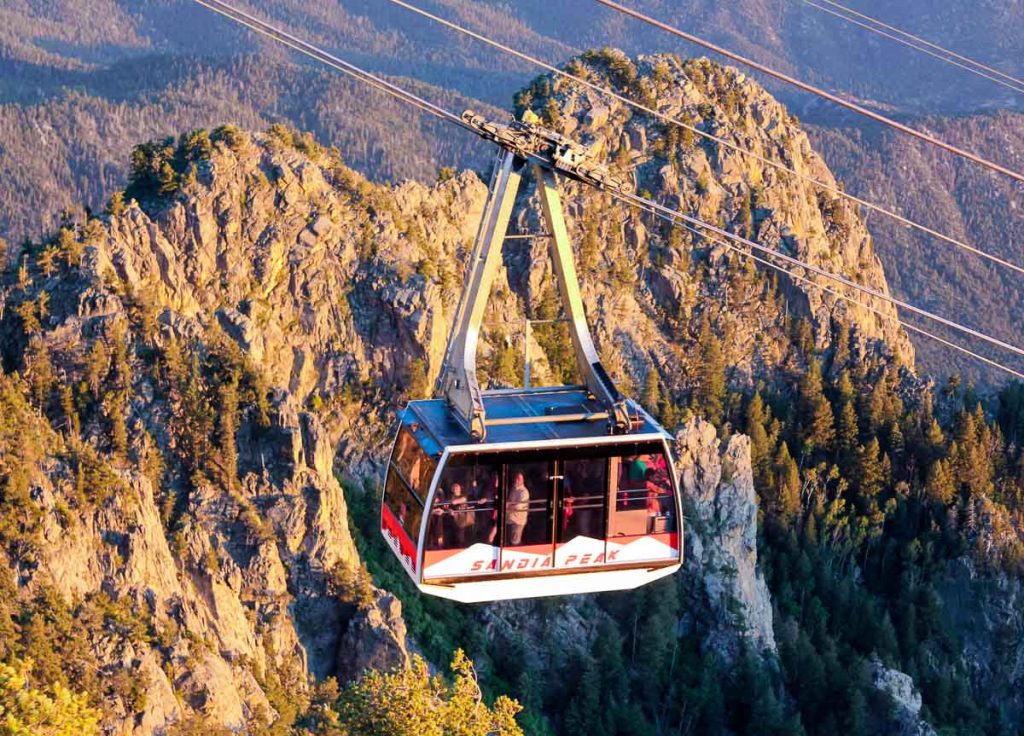
Albuquerque has one of the most dramatic city backdrops on this list because the Sandia Mountains rise straight from the eastern edge of town. The La Luz Trail climbs more than 3,000 feet toward Sandia Crest, so this is not a casual morning stroll.
On the opposite side of the city, Petroglyph National Monument changes the terrain completely. Short desert trails cross volcanic ground covered with thousands of Indigenous and historic carvings, and the park has several designated hiking areas directly along Albuquerque’s west side.
The city’s elevation sits above 5,000 feet, which helps compared with lower desert cities, but midsummer afternoons can still get hot. Some of New Mexico’s best road trip stops also sit within a few hours if Albuquerque is only the starting point.
10. Las Vegas, Nevada
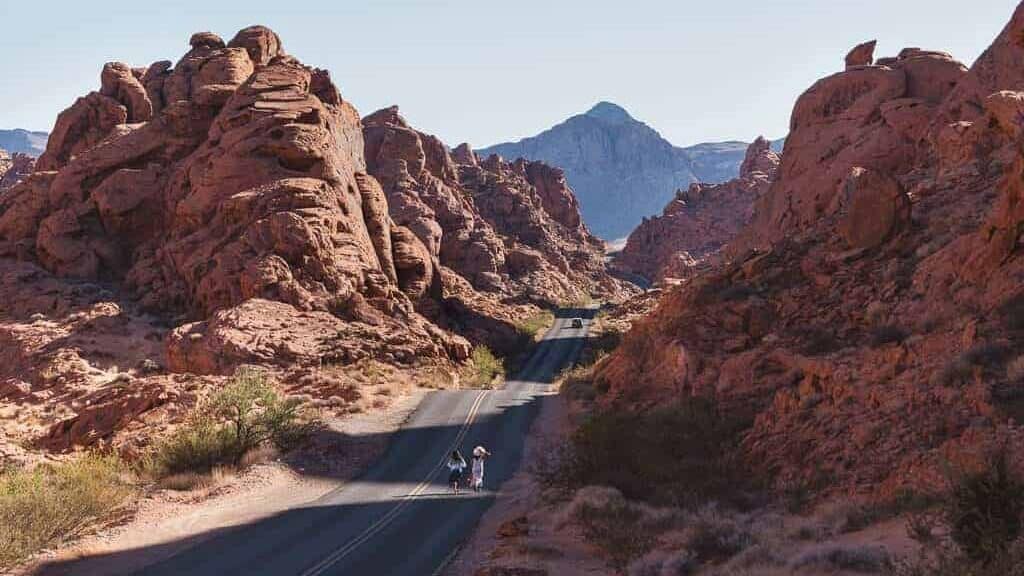
Las Vegas is not just casinos and neon lights. Red Rock Canyon sits roughly 20 miles west of the Strip, and trails such as Calico Tanks and Ice Box Canyon put you among sandstone cliffs before the casino crowds have even finished breakfast.
Lone Mountain is even closer, rising directly from the suburbs with a short climb and wide views across the valley. South of town, Sloan Canyon protects hundreds of rock art panels along desert trails with far fewer visitors than Red Rock.
Valley of Fire State Park sits roughly an hour away and makes an easy addition if you are already spending a full day exploring Las Vegas beyond the casinos. Its red sandstone trails are especially good in the cooler months, and there are far more stops around Valley of Fire than the roadside viewpoints suggest.
I would avoid serious desert hiking in the middle of a summer afternoon. Vegas may run around the clock, but the desert is much less forgiving
11. Reno, Nevada
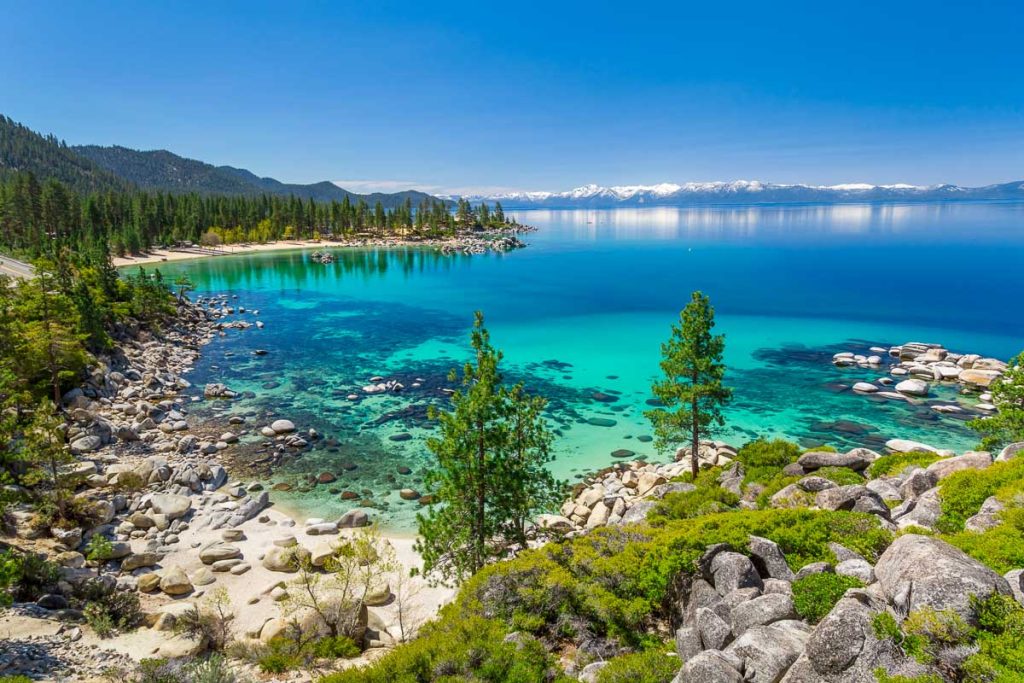
Reno has way more going for it than casinos. The Sierra Nevada rises immediately west of town, so you can go from downtown to pine forest surprisingly fast.
Hunter Creek Trail is one of the local standards, climbing out of dry sagebrush into forest before reaching a seasonal waterfall. Thomas Creek has shaded trails higher in the foothills, while Peavine Mountain gives you broad views back toward Reno and the Sierra.
Lake Tahoe is less than an hour away from parts of the city, putting the 165 mile Tahoe Rim Trail within easy reach. There are also dozens of Sierra day trips around Tahoe when you want something farther from Reno’s suburbs.7. Sacramento, California
12. Asheville, North Carolina
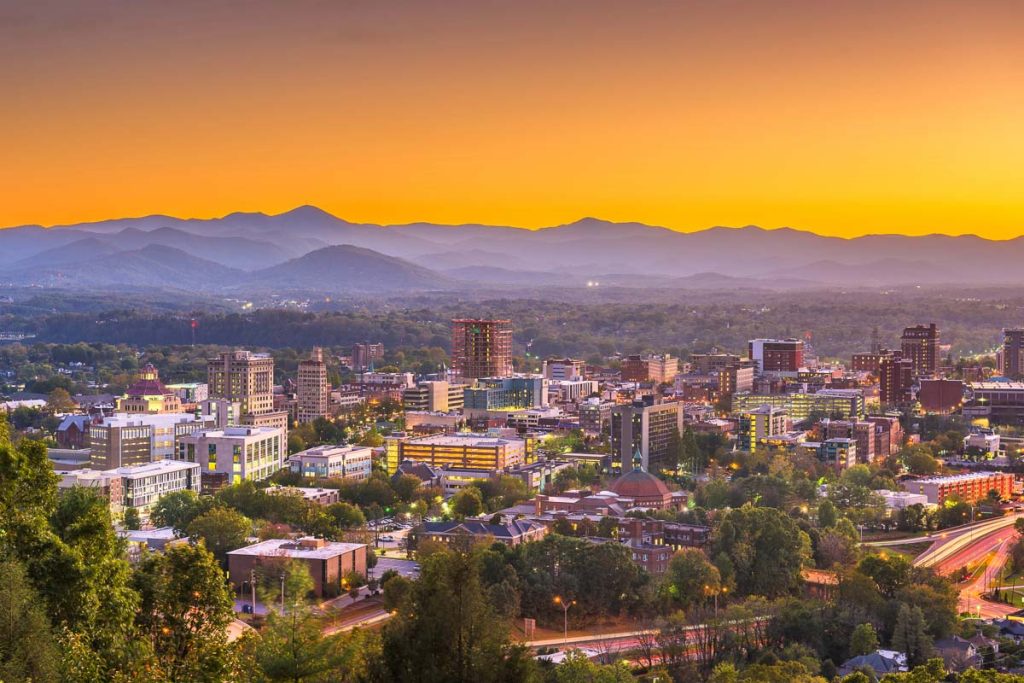
Asheville sits against the Blue Ridge Mountains with Pisgah National Forest covering huge stretches of land nearby. Bent Creek Experimental Forest is one of the quickest options from downtown, with a dense network used by hikers, trail runners, and mountain bikers.
Drive up the Blue Ridge Parkway and Craggy Gardens puts you above 5,000 feet without a brutal approach. Mount Pisgah gives you a steeper summit trail farther south with wide views across the surrounding ridges.
The Appalachian Trail does not run through downtown Asheville, but several sections are reachable on a longer day out. That makes the city a practical base for exploring more mountain country around North Carolina.
Even downtown feels tied to the outdoors, with gear shops and breweries full of people comparing where they went that morning.
13. Chattanooga, Tennessee

Chattanooga really does have one foot downtown and the other in the mountains. Stringer’s Ridge sits above the city center with a network of wooded trails and overlooks facing the skyline.
Lookout Mountain has the better known routes, including Sunset Rock and sections of the Bluff Trail high above the Tennessee River. Signal Mountain and the Cumberland Trail push you into longer outings when a quick city hike is not enough.
For flatter miles, the Tennessee Riverwalk runs for more than 15 miles along the water. Chattanooga also makes a convenient starting point for reaching more mountain and waterfall country around Tennessee.
14. Knoxville, Tennessee

Knoxville flies under the radar, but its Urban Wilderness connects more than 60 miles of trails close to downtown. You can move between forests, quarries, bike trails, and nature preserves without committing to an hour long drive first.
Ijams Nature Center anchors much of the network with riverside paths and wooded trails. Mead’s Quarry adds old quarry walls and water, while Baker Creek Preserve brings steeper terrain just south of downtown.
Great Smoky Mountains National Park is roughly an hour away depending on which entrance you use. If you have a full day, the Smokies can easily take over the entire itinerary.

Catherine, a seasoned travel writer, has lived in 4 different states and explored 36 states and 28 national parks. After spending two years embracing van life, she's now dedicated to sharing her vast knowledge of day trips across America. Catherine's other works has been referenced in major publications like MSN, Self, and TripSavvy.
| MY FAVORITE TRAVEL RESOURCES |
✈️ Find amazing guided tours and experiences with Viator to maximize your time! 🏘️ Plan ahead and secure your accommodation with Booking.com in advance. 🧾 Rent a car with Discovercars in advance and get the best prices for your day trip adventures. |